How to play Solitaire Classic
The timeless one-player card game — build all four suits from Ace to King and clear the table.
Klondike is the game almost everyone means by "solitaire", and it is worth knowing that it is a genuinely hard game: with three-card draw and unlimited redeals, a well-played deal is won somewhere around one time in three. Losing is not a sign you played badly, which is why the rules below focus on what you actually control.
The layout
Fifty-two cards are dealt into seven tableau columns of one, two, three, four, five, six and seven cards. Only the last card of each column is face up; the rest are face down and are turned over as they are exposed. The remaining twenty-four cards form the stock, which you draw from into a waste pile. Four empty foundations sit above the tableau, one per suit.
Legal moves, precisely
A card moves onto a tableau card of the opposite colour and one rank higher — a red seven onto a black eight. A face-up run in that alternating sequence moves as a single unit, and you may move any part of it starting from any card in the run, not only the whole thing. An empty column accepts a King, or a run headed by a King, and nothing else. Foundations build up by suit from Ace to King, and a card can be pulled back off a foundation into the tableau, which is occasionally the move that unblocks a column.
The stock, and what "one pass" means
Drawing turns three cards at a time onto the waste, and only the top one is playable. This is why the stock is not a free resource: which cards become reachable depends on how many you have drawn, so drawing changes the *phase* of the whole remaining deck. Playing a card off the waste shifts every later group by one, which can make a previously buried card reachable on the next pass.
When the deal is simply lost
A deal is unwinnable when every face-down card is locked behind a card that cannot legally move and the stock offers nothing that changes it. There is no shame in it and no way to tell in advance. The standard measure of skill in Klondike is not the win rate but whether you found the win in the deals that had one.
Scoring and variants
This version is played to completion rather than on a points clock; the goal is all fifty-two cards on the foundations. The common variants change the difficulty sharply: one-card draw with unlimited redeals is far easier than three-card draw, and "Vegas" scoring limits you to a fixed number of passes through the stock, which turns it into a very different, much tighter game.
Controls
Drag cards with the mouse or your finger.
- Tap or double-click a card to send it to a foundation. Click the deck to draw.
- N new game, U undo, D draw.
Strategy tips
- Turn over face-down cards before anything else. A move that exposes a new card is almost always better than a move that only tidies the tableau.
- Do not rush cards to the foundations. A low card sent up early is a card you cannot use to unstack a column later, and that is the most common way a winnable deal is lost.
- Empty a column only when you have a King ready to fill it — an empty column with no King is dead space.
- Prefer to unstack the longest column with the most hidden cards; it is where the deal is decided.
- When two moves look equivalent, pick the one that keeps both colours available at that rank. Ending up with two red sixes and no black seven is how a tableau seizes up.
- Cycle the stock once with no moves at all if you are stuck, just to see what is in it. Knowing where the missing Ace sits changes which column you should be attacking.
- Use undo to explore. Klondike rewards looking two moves ahead far more than it rewards speed.
Now play Solitaire Classic
Free, in your browser, with no download and no sign-up.
Play Solitaire Classic →Solitaire Classic is a card games game . See all card games games or browse the whole catalogue .
More rules and guides
-
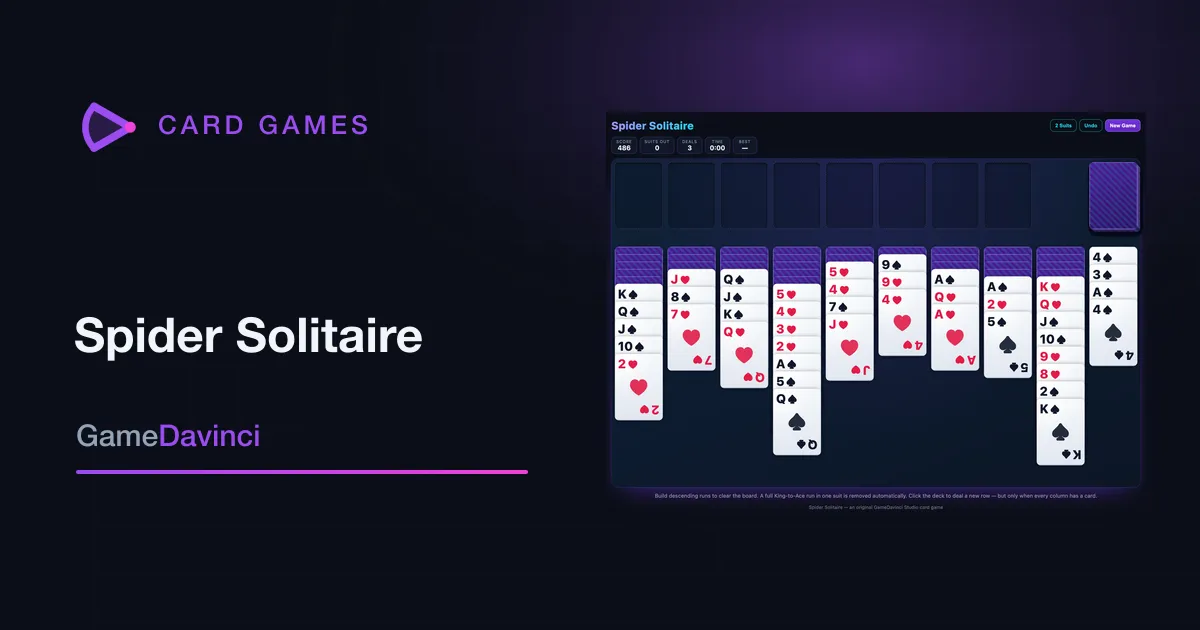
Spider Solitaire
Two packs, ten columns, eight suits to clear — the deep end of solitaire, in one, two or four suits.
Card Games -
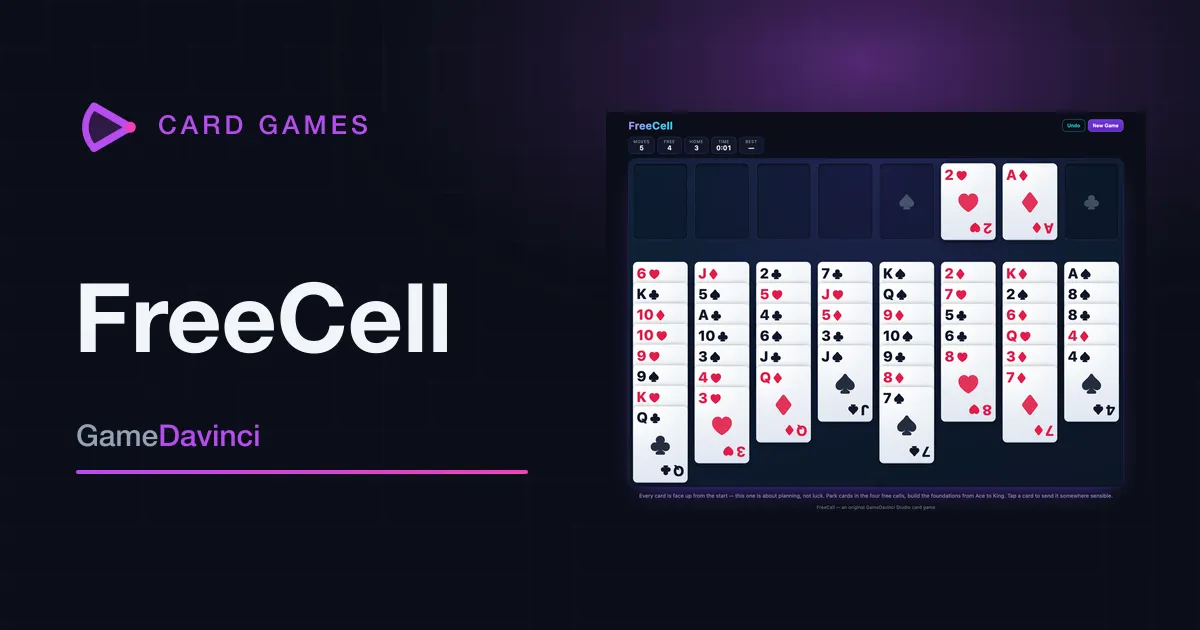
FreeCell
Every card face up from the start — the solitaire that is pure planning, with almost no unwinnable deals.
Card Games -
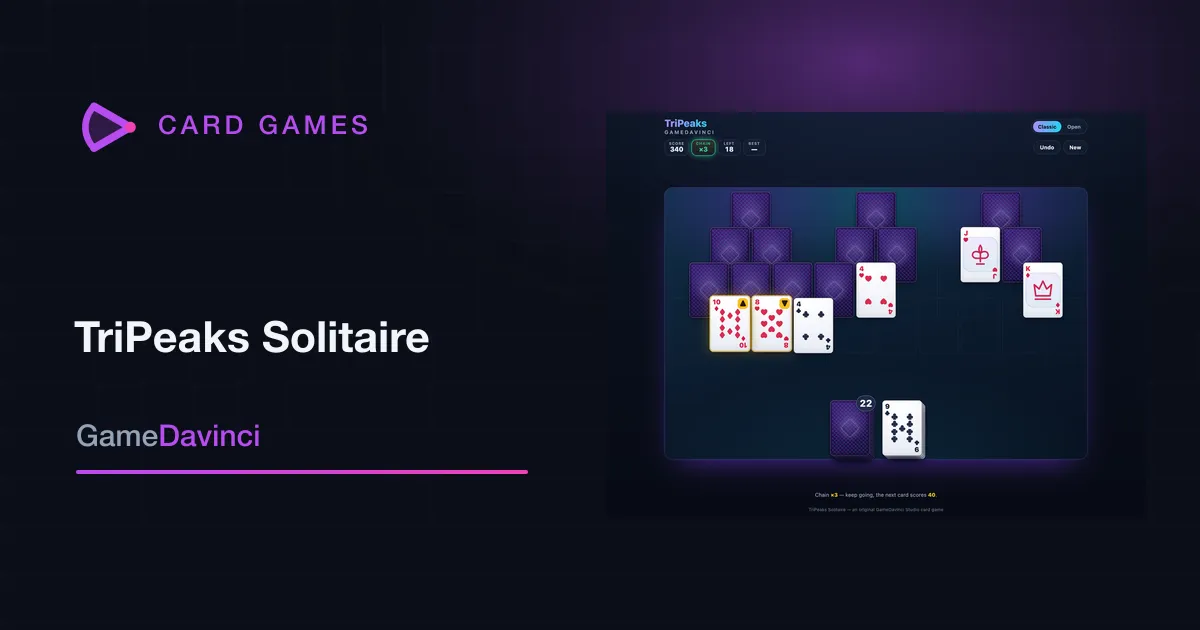
TriPeaks Solitaire
Three overlapping peaks, 28 cards, one waste pile — and a chain bonus that pays more for every card you take without touching the deck.
Card Games -

Hearts
Duck the hearts, dodge the queen of spades, and finish with the lowest score after thirteen tricks against three computer players.
Card Games