How to play Core Defender
Defend a CPU core from corrupted data packets — your firewall towers are the maze.
Core Defender is a tower defence game with no path drawn on the board, because you draw it. Corrupted packets stream from the entry port towards your core along the shortest route they can find, and your towers are the only walls on the board.
The rule that changes everything
Because packets always take the shortest open route, every tower you place rewrites their journey.
This is a maze-building game wearing tower-defence clothes. A wall in the right place is worth more damage than the tower on top of it will ever deal, because doubling the length of the path doubles the time every packet spends being shot at.
Placements that would seal the port off completely are rejected outright with PATH BLOCKED — you can never trap a packet with nowhere to go. That guarantee is what makes the maze safe to experiment with: you cannot accidentally break the level, so the only question is whether your maze is long enough.
The four towers, one by one
Pulse handles single targets cheaply. Arc chains through crowds. Rail pierces everything in a long straight lane. Cryo slows without dealing damage.
Each placement is therefore three decisions at once: what the tower shoots, where it shoots from, and what the wall it creates does to the route.
Building a good maze
The aim is length, not thickness. A long winding corridor exposes packets to your towers for many seconds; a thick block of towers next to a short path exposes them for one.
Build switchbacks. A snaking route that doubles back on itself repeatedly keeps packets inside the same cluster of towers several times over, so each tower earns its cost many times.
Leave your corridors one tile wide. Wider corridors let packets cut corners, which shortens the effective path.
Where to put which tower
Rail wants a long straight, so aim a corridor down its lane rather than placing it and hoping.
Arc wants the place where packets bunch up — usually a corner of a switchback, where the queue folds back on itself.
Cryo is a force multiplier rather than a weapon. It is worth most at the entrance to a long stretch covered by other towers, because slowing a packet before it enters that stretch multiplies the damage everything else does. Placing Cryo at the very end, next to your core, is nearly worthless.
Reading the rewrite
Whenever you place a tower, look at where the route moved to. Sometimes a single wall causes packets to take a completely different corridor, which can leave half your towers shooting at nothing.
That is the most common mistake in this game: a strong maze quietly ruined by one late placement that opened a shortcut.
Economy
Every tower is money that could have been a different tower somewhere better. Early on, prefer cheap towers that build the maze; upgrade once the route is long and you know packets will be walking past them for a while.
Controls
Click an empty cell to open the build palette, or press 1-4 to quick-select a tower and click to place it.
Keyboard
- Click a built tower to upgrade or sell it.
- Space cycles 1x/2x/3x speed; Enter sends the next wave.
Touch
- Tap a cell for the radial menu, tap a tower type, then tap the check mark to confirm the ghost preview.
Strategy tips
- Build for path length, not firepower. Doubling the route doubles the time every packet spends under fire, and no amount of damage beats that.
- Make switchbacks. A route that folds back on itself keeps packets inside the same cluster of towers several times over.
- Keep corridors one tile wide. Wider paths let packets cut corners, which quietly shortens the maze you paid for.
- Check where the route moved after every placement. One wall can open a shortcut that leaves half your towers shooting at nothing.
- Put Cryo at the start of a defended stretch, not at the end. Slowing a packet before it enters your guns multiplies everything they do; slowing it by the core does almost nothing.
- Aim a straight corridor down Rail's lane. It pierces everything in a line, so the corridor should be built for it rather than around it.
- Put Arc where the queue folds. Chaining is worth most where packets bunch, which is the inside of a switchback.
- Build the maze first, upgrade second. Cheap towers that lengthen the route are worth more early than expensive ones that do not.
Now play Core Defender
Free, in your browser, with no download and no sign-up.
Play Core Defender →Core Defender is a strategy game . See all strategy games or browse the whole catalogue .
More rules and guides
-
 Featured
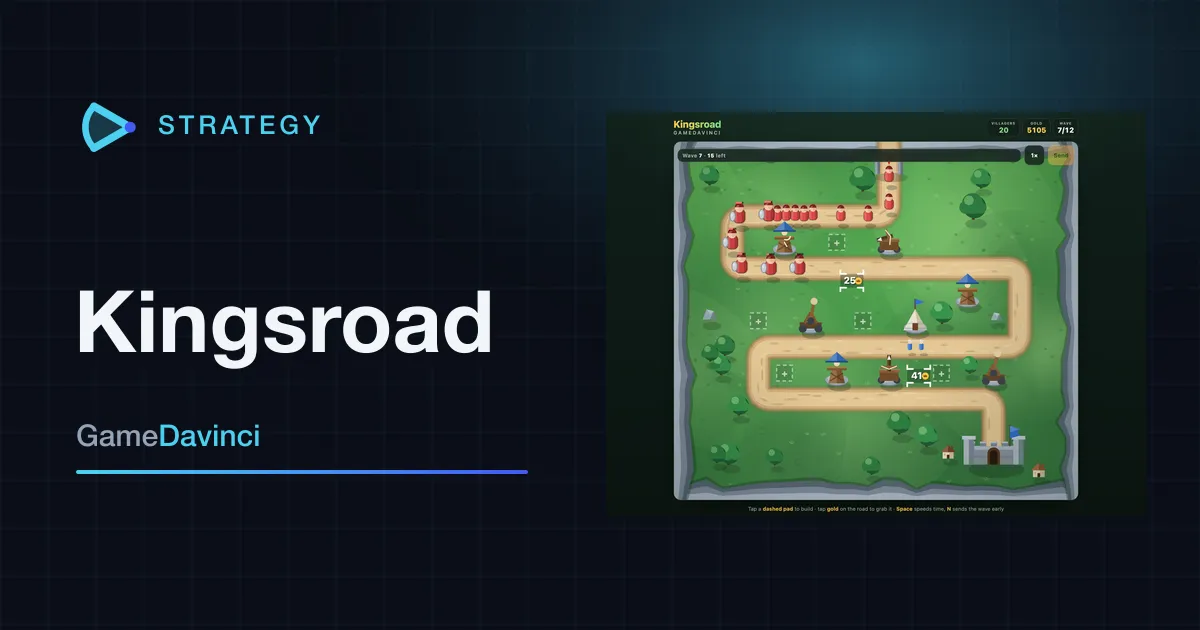
Kingsroad
Hold a winding medieval road for twelve waves — every map is proved beatable before you see it.
Strategy -

Critical Mass — Chain Reaction
Drop orbs until a cell detonates into its neighbours and takes them over. One tap can flip half the board. Play a friend on one phone or by link.
Strategy -
 Featured
Tank Duel
Turn-based artillery across ground you can blow apart: set the angle, judge the power, read the wind, and walk your shells onto the other tank before it walks its onto you.
Strategy