How to play Gin Rummy
Build runs and sets, cut your deadwood to ten or less, and knock before the computer does — with gin, undercuts and lay-offs all in play. First to 100 wins.
Gin Rummy was codified in New York around 1909 as a faster two-player alternative to standard rummy, and its one real innovation is the knock: you do not have to empty your hand to end a round, you only have to get it cheap enough. Everything below is the full rule set this version implements.
Setup and the deal
A standard 52-card deck, no jokers. The dealer gives each player ten cards one at a time and turns the next card face up to start the discard pile; the remainder becomes the face-down stock. The deal alternates each hand, and the non-dealer plays first. Note that in this version play begins immediately with the first player's normal turn, rather than with the optional pass-and-take of the opening upcard that some house rules add.
Card values
The ace is LOW and worth one point. Number cards are worth their pip value. Jack, queen and king are worth ten each. Because the ace is low, ace-two-three is a legal run and queen-king-ace is not — a run may never turn the corner. This is the rule most often played differently at kitchen tables, so it is worth being explicit about.
A turn
Draw exactly one card, either the top of the stock or the top of the discard pile, then discard exactly one card. You may not take the discard and immediately throw the same card back. You end every turn holding ten cards.
Melds
A set is three or four cards of the same rank — three sevens, or all four. A run is three or more cards in consecutive order within a single suit, and runs have no upper length limit. The rule that decides most hands is that a card belongs to at most one meld: holding seven, eight and nine of spades alongside the other three nines, you may spend the nine of spades in the run or in the set, but not in both, and which you choose changes your count.
Deadwood and knocking
Deadwood is the total value of the cards left over once you have arranged your hand as cheaply as possible. You may knock as you make your discard whenever the ten cards remaining would leave you with ten deadwood or fewer. Knocking is announced with the discard, both hands are then revealed, and play stops for that deal.
Laying off
The defender — the player who did not knock — arranges their own melds, then extends the KNOCKER's melds with their remaining deadwood. A spare six goes onto a three-four-five of the same suit, a fourth queen joins a set of three, and a card laid off can create room for another: once the six is on the run, the seven fits too. Only the deadwood still in hand after all of that counts. The defender may not lay off onto their own melds, and may not lay off at all against gin.
Scoring a hand
If the knocker's deadwood is lower, the knocker scores the difference between the two counts. If the knocker had zero deadwood the hand is gin, and they score the difference plus a twenty-point bonus with no lay-off allowed. If the defender's deadwood is equal to or lower than the knocker's, that is an undercut: the DEFENDER scores the difference plus a twenty-point bonus. An undercut on an equal count is worth exactly twenty, and it is the reason knocking at the maximum of ten is a gamble rather than a formality.
How the game ends
There are three ways a hand can finish. Somebody knocks, somebody goes gin, or the stock is drawn down to its last two cards — in which case the hand is a wash, nobody scores, and the deal simply passes. Hands continue until one player's running total reaches 100 or more, and that player wins the game.
Controls
Tap the pile you want to draw from, then tap the card you want to throw.
Touch
- Tap the stock or the discard pile to draw.
- Tap a card once to raise it, then tap it again — or press Discard — to throw it.
- Press Knock when it lights up; it reads Gin instead when the discard leaves you with nothing.
Keyboard
- S draws from the stock and D takes the discard.
- Left and Right walk along your fanned hand.
- Enter throws the raised card, K knocks with it, and N moves on after a hand.
Strategy tips
- Throw high cards early. A lone king is ten points of risk and it will still be ten points on the last turn.
- Keep pairs and same-suit neighbours even when they are worth more than a stray low card; those are the hands that turn into melds.
- Watch what the computer takes off the discard pile. It only takes a card that genuinely helps, so every take narrows down what it is building.
- Watch what it throws too. It never discards a card its own melds need, so a discarded nine means it is not sitting on three of them.
- Do not feed the discard pile with cards next to what your opponent just took. A card adjacent in rank and suit is the one they are waiting for.
- Knocking at ten is the weakest knock there is. If you can get to five or six within a turn or two, the extra points usually beat the risk of an undercut.
- Late in the hand, knock. Holding out for gin with six cards left in the stock hands your opponent the initiative for nothing.
- Count the stock. Once it is thin, a wash costs you the whole hand, so take whatever score is on the table.
Now play Gin Rummy
Free, in your browser, with no download and no sign-up.
Play Gin Rummy →Gin Rummy is a card games game and a longstanding classic. See all card games games or browse the whole catalogue .
More rules and guides
-
 Featured
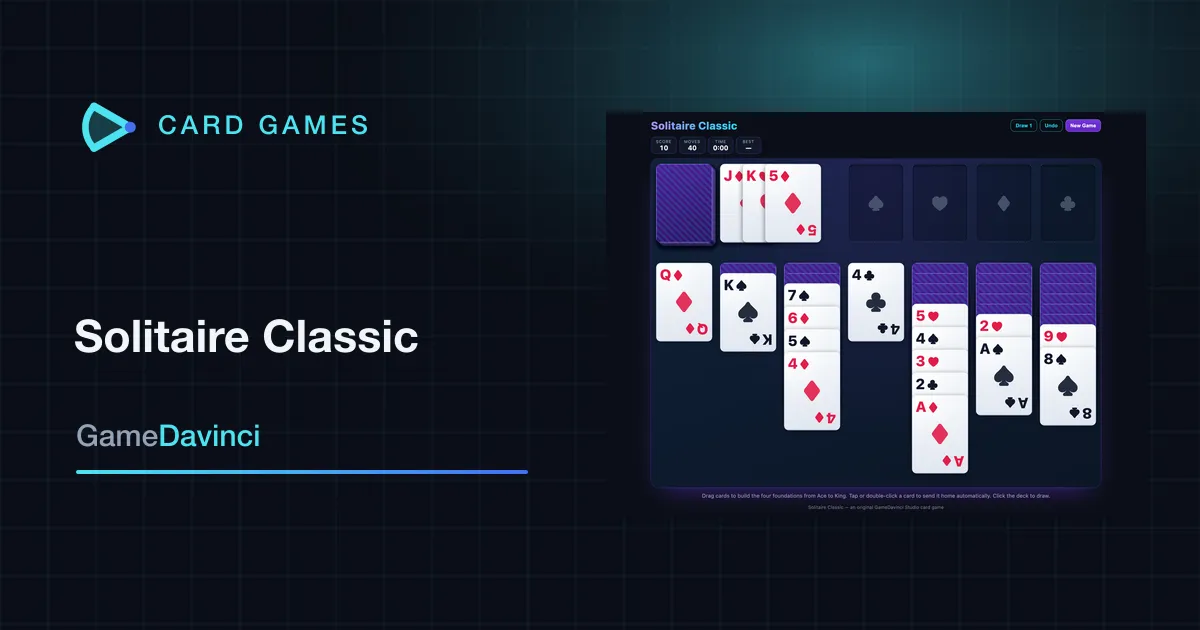
Solitaire Classic
The timeless one-player card game — build all four suits from Ace to King and clear the table.
Card Games -
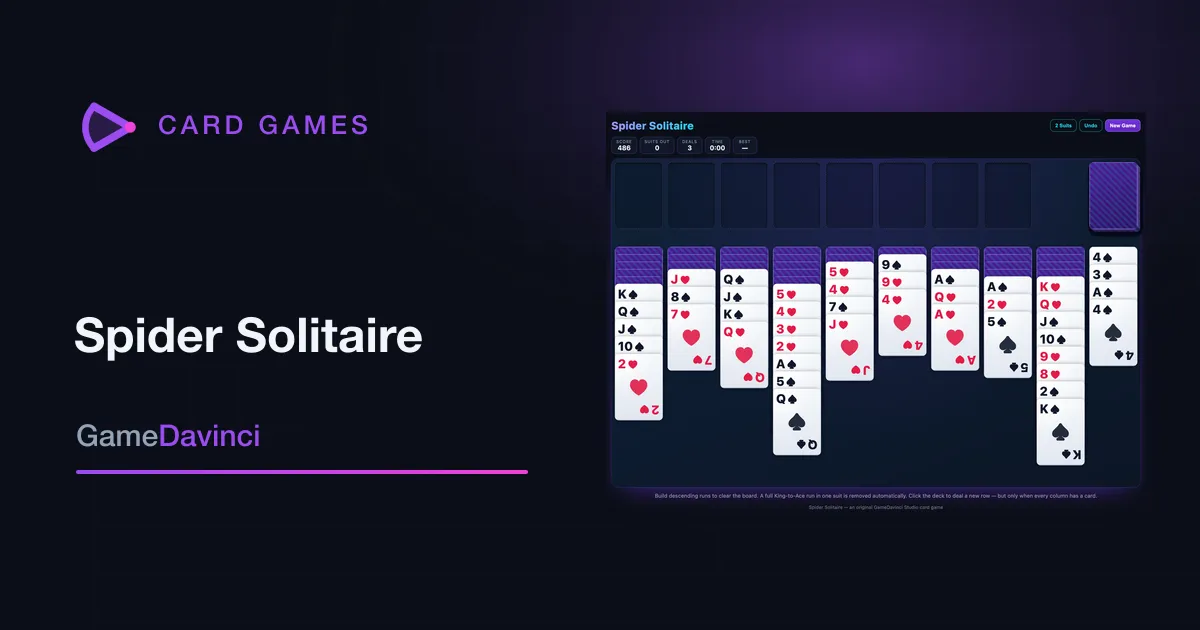
Spider Solitaire
Two packs, ten columns, eight suits to clear — the deep end of solitaire, in one, two or four suits.
Card Games -
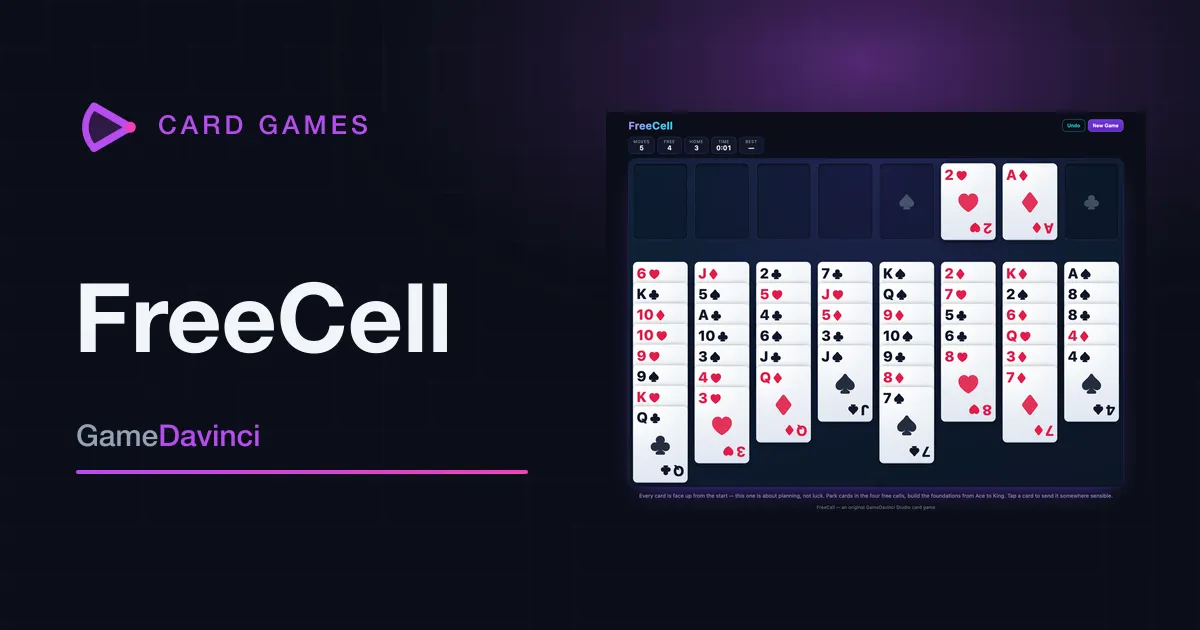
FreeCell
Every card face up from the start — the solitaire that is pure planning, with almost no unwinnable deals.
Card Games -
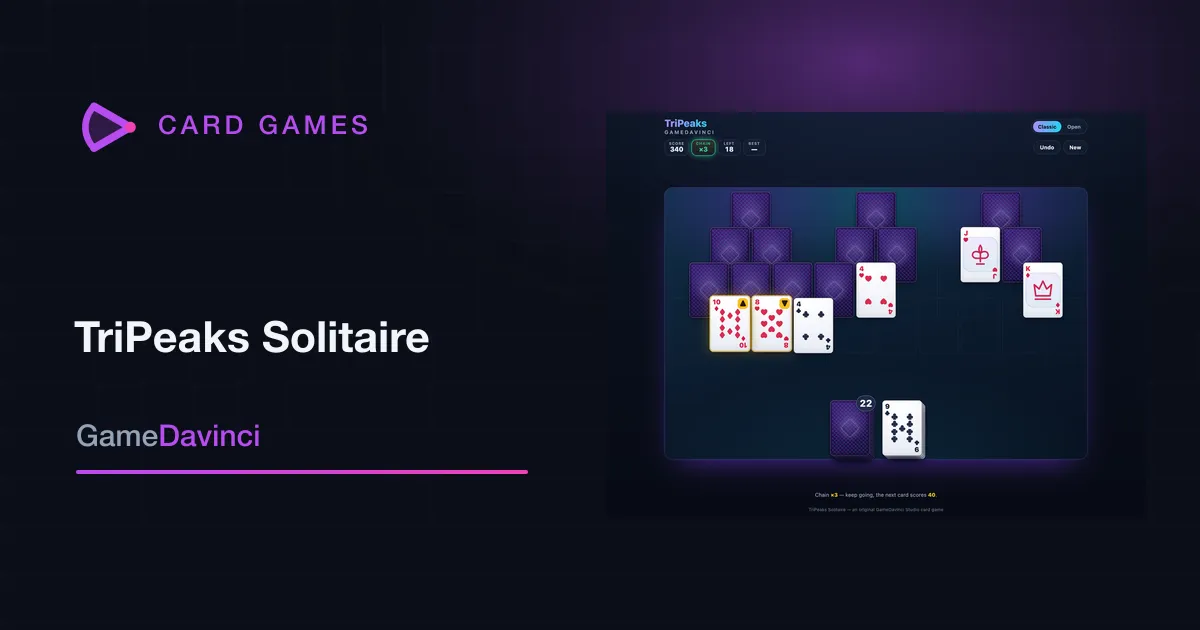
TriPeaks Solitaire
Three overlapping peaks, 28 cards, one waste pile — and a chain bonus that pays more for every card you take without touching the deck.
Card Games