How to play Golf Solitaire
Seven columns, thirty-five cards, one waste pile. Play front cards one rank up or down to clear the table. The Ace is low, and only about 46 deals in 100 can be cleared at all.
Golf Solitaire is named for the score, not the shape. One deal is a hole, the cards you leave behind are your strokes over par, and a round is nine deals played back to back. Nothing is hidden and nothing is dragged, so the only thing standing between you and a cleared table is the order you take the cards in.
The setup
Seven columns of five cards, all face up, dealt across the row: one card to each column, then a second to each, five times over. Thirty-five cards on the table. The thirty-sixth goes face up beside the deck and starts the waste pile. The last sixteen are the deck.
The card at the near end of a column — the one at the bottom of the screen, overlapping the rest — is that column's front card. Only front cards move, and every column has exactly one until it is empty.
The move
Play any front card whose rank is exactly one higher or one lower than the card showing on the waste. It becomes the new waste card, and the card behind it becomes its column's new front card.
Suits are irrelevant. A red Seven takes a black Six exactly as a black Seven would.
The Ace is low, and it stays low
This is the rule that separates one Golf from another, so it is worth stating flatly: rank does not wrap in this game. An Ace takes a Two and nothing else. A King takes a Queen and nothing else. There is no Ace-on-King and no King-on-Ace.
That one decision changes how many deals are winnable, and by a very large margin. An exhaustive solver run over the first 1,000 seeded deals of this game clears 458 of them, or 45.8%, with perfect play. The same solver, on the same 1,000 deals, with the wrap switched on, clears 928 of them: 92.8%. This game ships without the wrap, because that is the traditional rule and because it is the one that makes the deal itself interesting.
So roughly one deal in two cannot be cleared by anybody — not by you, and not by a program that can see the whole tree at once. That is normal Golf, and it is not a flaw. When you run out of moves the game runs that same solver over the deal you were given and tells you which kind of loss it was, and the Replay button re-deals the identical cards so you can take them in a better order.
Scoring in full
A run is the sequence of table cards you play without turning the deck. The first card of a run scores 10, the second 20, the third 30 — the nth card of a run scores ten times n.
Emptying a column adds 100 on top of the card's own value. Clearing all thirty-five cards adds 500.
The arithmetic is worth internalising, because it changes how the game should be played. A run of eight cards scores 360. Two runs of four score 100 and 100. The same eight cards are worth nearly twice as much taken in one go, and that gap widens the longer the run gets.
The deck
Sixteen cards, turned one at a time, face up onto the waste. There is no redeal and no second pass: once the deck is empty it stays empty.
Turning is always legal while cards remain and it never costs you points directly. What it costs is the run, which resets to zero. A player who taps the deck the moment the obvious move dries up will finish a cleared table with a fraction of the score of a player who found one more card first.
How the game ends
Two ways, and only two. You clear all thirty-five table cards, which wins the deal and pays the 500 bonus. Or no front card is one rank from the waste card and the deck is empty, which ends it where it stands — the cards still on the table are your strokes over par.
Note that an empty deck on its own is not the end. As long as one front card still matches the waste, the game is alive, and a long run off an empty deck is where the biggest scores come from.
Controls
Tap or click the front card of any column to play it onto the waste. Tap the deck to turn a new card.
Keyboard
- 1 to 7 play the front card of that column.
- Arrow keys move between columns, Enter or Space plays the focused card.
- D turn the deck, U undo, R replay the same deal, N new deal.
Strategy tips
- Count the cards you need before you commit. If both black Sixes are already buried and the last red Six is under four cards, a Five on the waste is a dead end.
- Dig the tall columns first. A five-card column has four cards you cannot see the use of yet; a one-card column has none, and emptying it early buys you nothing you cannot buy later.
- Emptying a column is worth 100, but it is worth more than 100 — it permanently shrinks the number of places a card can hide.
- Before turning the deck, check every front card, not only the ones near the card you just played. The move you want is usually two columns away.
- Remember the Ace is low. An Ace on the waste asks for a Two and only a Two, and a King on the waste asks for a Queen and only a Queen. Both are near-dead ends, so spend them when you have the follow-up in hand.
- Guard the run. The nth card of a run scores ten times n, so eight cards taken together are worth nearly twice the same eight split in half.
- When two front cards of the same rank are available, take the one that uncovers the card you actually need next. They score the same now and are worth very different amounts a move later.
- About half of all deals cannot be cleared at all. If you lose, read the banner: when it says the deal was clearable, replay it — the same cards in a different order is the whole lesson.
Now play Golf Solitaire
Free, in your browser, with no download and no sign-up.
Play Golf Solitaire →Golf Solitaire is a card games game . See all card games games or browse the whole catalogue .
More rules and guides
-
 Featured
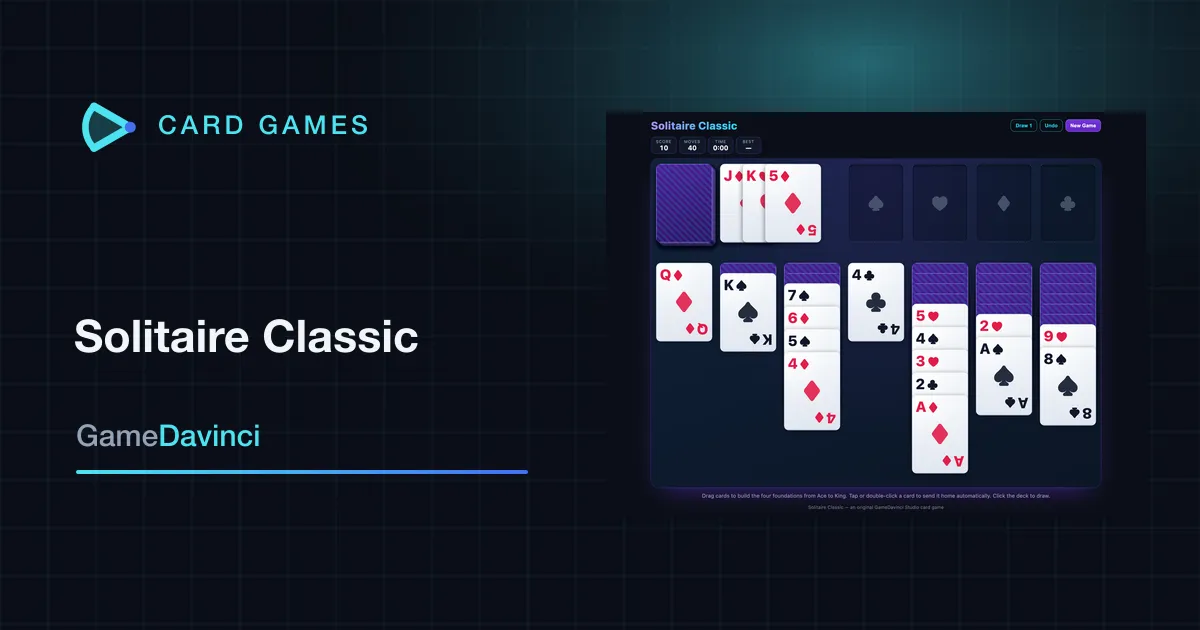
Solitaire Classic
The timeless one-player card game — build all four suits from Ace to King and clear the table.
Card Games -
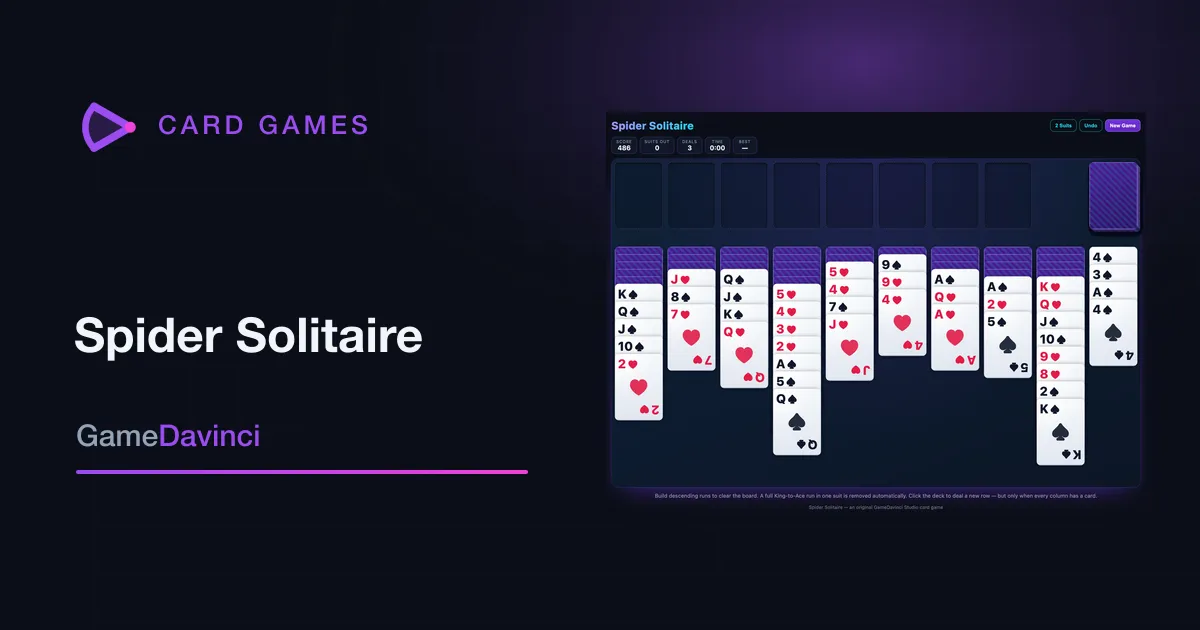
Spider Solitaire
Two packs, ten columns, eight suits to clear — the deep end of solitaire, in one, two or four suits.
Card Games -
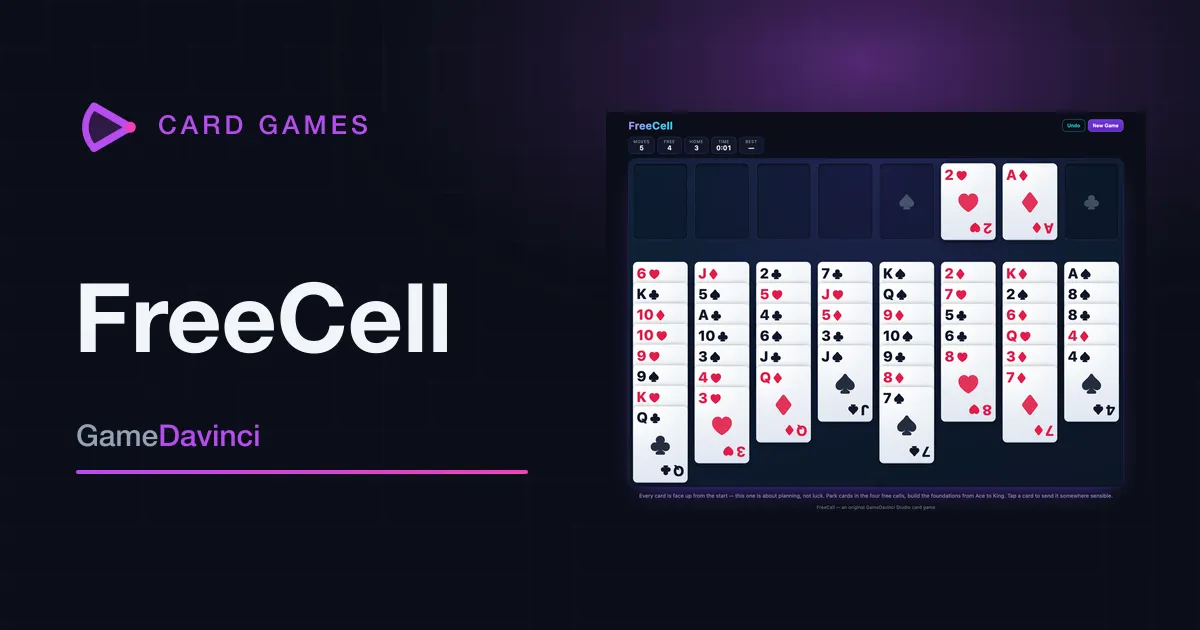
FreeCell
Every card face up from the start — the solitaire that is pure planning, with almost no unwinnable deals.
Card Games -
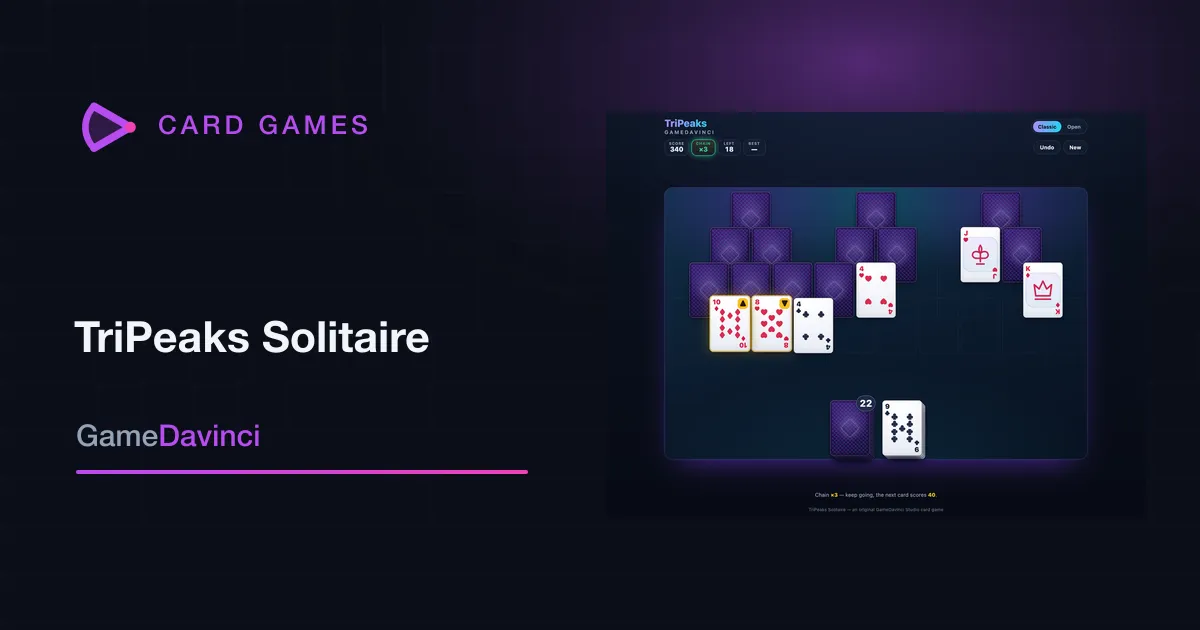
TriPeaks Solitaire
Three overlapping peaks, 28 cards, one waste pile — and a chain bonus that pays more for every card you take without touching the deck.
Card Games