How to play Reversi
Outflank the computer to flip its discs to your colour and own the most of the board when it fills.
Reversi — the game also sold as Othello — is played on an eight-by-eight board with discs that are light on one side and dark on the other. You take light, the computer takes dark. The game starts with four discs already in the middle, arranged diagonally.
The move
Every move must outflank. You place a disc on an empty square so that, in at least one straight line from it — horizontal, vertical or diagonal — there is an unbroken run of your opponent's discs ending in a disc of your own. Every enemy disc in every line you outflank flips to your colour.
If a move outflanks nothing, it is not legal. This is the rule beginners find surprising: on a board full of empty squares, most of them cannot be played.
The board marks the squares you are allowed to play, so you never have to hunt for them.
Passing and the end
If you have no legal move, your turn is passed automatically and your opponent moves again. You do not choose to pass and you cannot decline to move when a move exists.
The game ends when neither player has a legal move — usually because the board is full, but sometimes earlier. Whoever has more discs of their colour showing wins.
Why the disc count is a trap
The single biggest mistake in Reversi is playing for discs. Flipping a huge row feels like progress and is frequently the losing move.
The reason is mobility. Every disc you flip is a square your opponent can now potentially outflank, and a player with lots of discs in the middle of the game typically has lots of exposed edges and few safe moves. The player with fewer discs often has more options, and options are what win the endgame — because the last few moves decide enormous numbers of flips.
A good rule for the first two thirds of the game is to take the fewest discs that does the job. Keeping your discs clustered in the centre and letting your opponent hold the outside is a standard winning shape.
Corners, and the squares beside them
A disc in a corner can never be flipped. There is no line through a corner that has a square on the far side, so once it is yours it is yours for the rest of the game — and it anchors every line running out of it.
Corners are therefore worth more than any number of ordinary discs, and the whole middlegame is really a fight over who is forced to give one away.
The squares diagonally adjacent to an empty corner are the dangerous ones. Playing there hands your opponent the corner in most positions, and they are the classic way a winning game is thrown away. The squares directly beside a corner along an edge are risky for the same reason, though less reliably so.
The three strengths
The computer plays with positional judgement rather than counting discs — it values corners and mobility, which is why it can look like it is losing badly and then take the last ten moves. Easy is gentle. Medium punishes a careless edge move. Hard guards its corners and squeezes your legal moves until you have nothing safe left to play.
Controls
Tap or click any highlighted square to place a disc.
- You can only play where you outflank at least one of the computer's discs.
- Set the computer's strength with Easy / Medium / Hard.
Strategy tips
- Stop counting discs until the last few moves. Being far behind on the count in the middle of the game is normal and frequently good.
- Take the fewest discs that does the job. Small, quiet moves keep your position compact and leave your opponent with fewer squares to outflank.
- Take a corner whenever one is legally available. It can never be flipped, and it anchors every line running away from it for the rest of the game.
- Avoid the square diagonally next to an empty corner. Playing there is the most reliable way to hand the corner over, and it is how most winnable games are lost.
- Aim to keep your discs in the middle and let your opponent own the outside early. Interior discs are harder to flip and leave you more legal moves later.
- Watch your own mobility. If you can count your legal moves on one hand while your opponent has plenty, you are losing regardless of the disc count.
- Play edges only when the row is stable. An edge disc with gaps beside it is an invitation; a full, settled edge is genuinely strong.
- Think about who runs out of moves first. Forcing your opponent into a position where every legal move gives you a corner is the standard way strong players finish.
Now play Reversi
Free, in your browser, with no download and no sign-up.
Play Reversi →Reversi is a board game . See all board games or browse the whole catalogue .
More rules and guides
-
 Featured
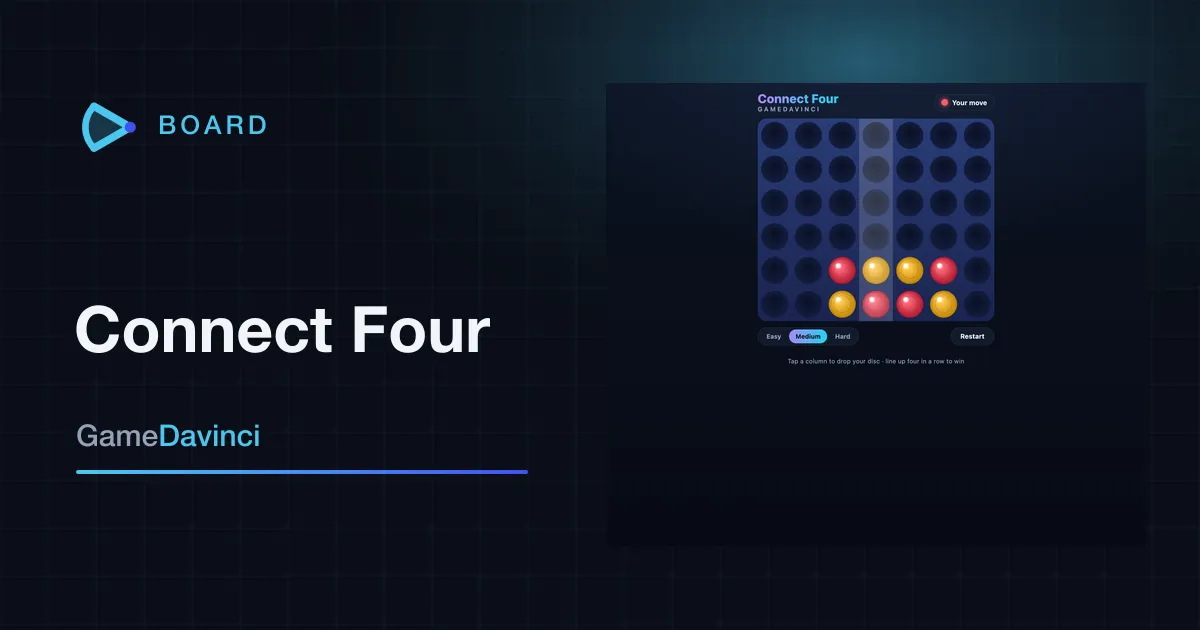
Connect Four
Drop your discs and be the first to line up four in a row against a computer that actually plans ahead.
Board -
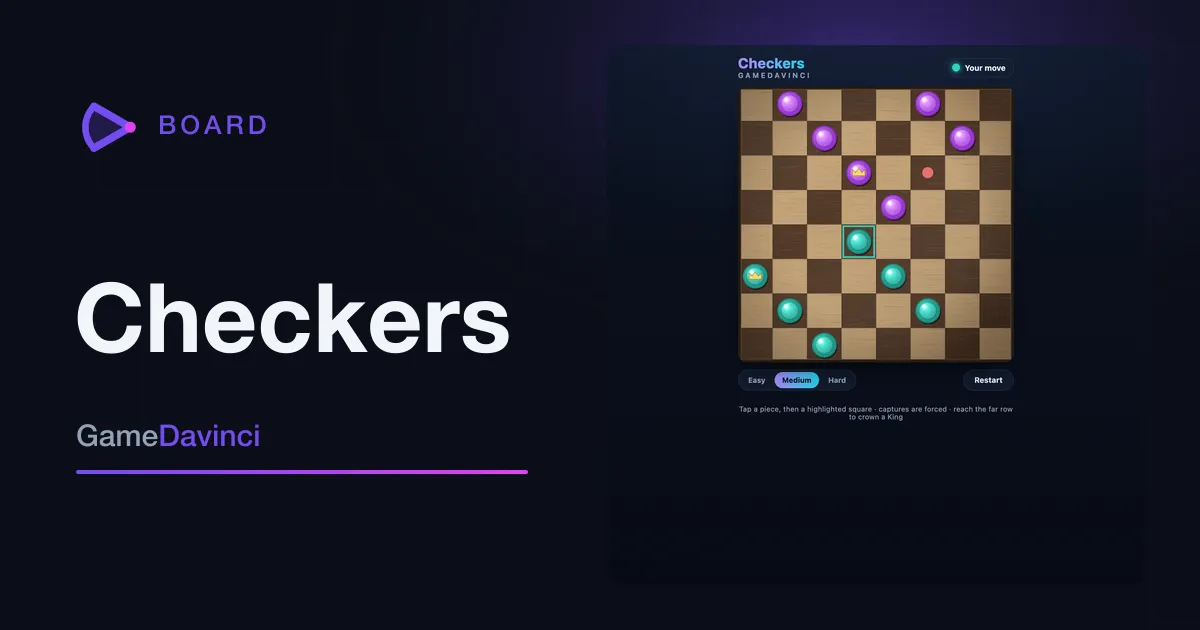
Checkers
Jump and crown your way to victory in classic draughts against a computer that hunts for every capture.
Board -
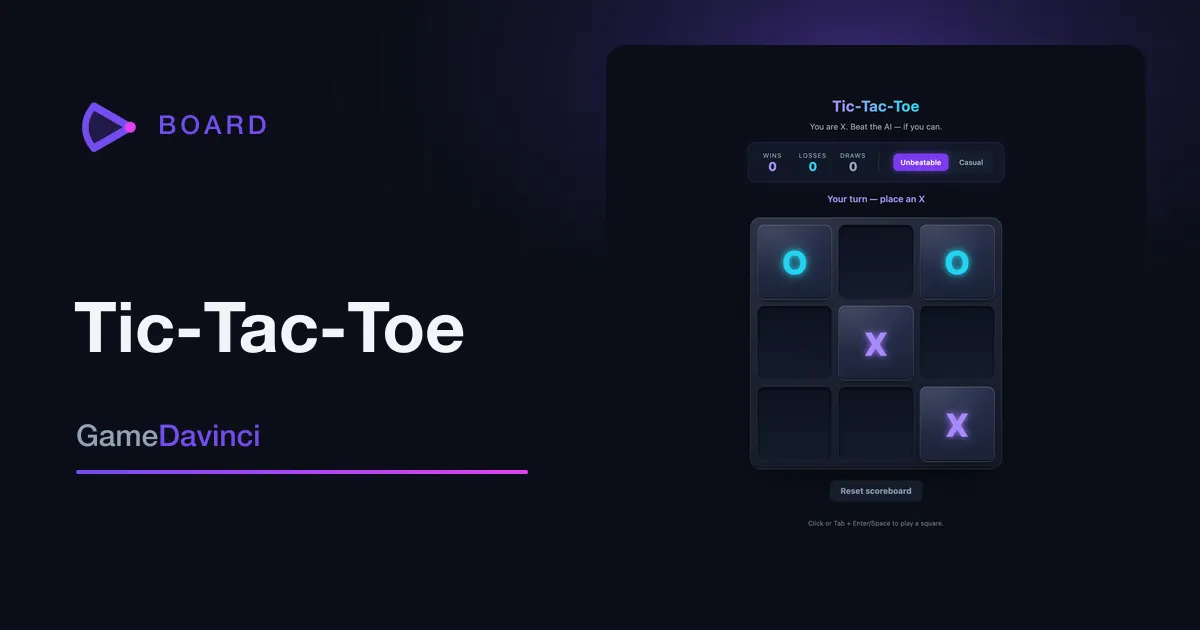
Tic-Tac-Toe
The timeless 3-in-a-row duel — take on an AI that never loses, or dial it back to casual.
Board -

Fleet Hunt
Hunt down the computer's hidden fleet grid by grid before it sinks yours — classic naval guesswork with a sharp AI.
Board