How to play Spades
Bid the tricks you can take, then take exactly that many. Partnership Spades with nil, bags and a game to 500 against three computer players.
Spades is a partnership trick-taking game for four, played with a standard 52-card deck and no jokers. The two players sitting opposite each other are partners and share a single score. Aces are high, twos are low, and the spade suit is permanently trump.
The deal
The whole deck is dealt out, thirteen cards to each player, one at a time. There is no kitty, no talon and nothing turned up: every card is in somebody's hand from the start, which is why counting what has gone is worth so much here. The deal passes one seat clockwise after every hand.
The auction
Starting with the player to the dealer's left and going clockwise, each player states the number of tricks they expect to take. There is no passing, no doubling and no second round — you say a number once and you live with it.
The two numbers from one partnership are added together to make its contract. The partnership needs that many tricks between them; it does not matter which partner takes which. A partnership that bids four and three needs seven tricks, and one player taking all seven is the same as four and three.
Thirteen tricks exist, so the four bids very rarely total thirteen. When they total less — which is usual — the surplus tricks have to go somewhere, and that is where bags come from.
Following suit and trumping
The player to the dealer's left leads to the first trick. Each player in clockwise order must follow the suit led if they hold a card in it. A player with none of the led suit may play absolutely anything, including a spade.
The trick goes to the highest spade played. If nobody played a spade, it goes to the highest card of the suit that was led — a card of any other suit cannot win a trick it was not led to, however high it is. The winner of a trick leads to the next one.
Breaking spades
Spades may not be LED until they have been broken. Spades are broken the moment anybody plays one on a trick led in another suit, whether they did it to win the trick or because they had nothing else. Once broken, they stay broken for the rest of the hand.
There is one exception, and it is the one people get wrong: a player whose remaining cards are all spades may lead a spade even though nobody has broken them. They have no legal alternative, and leading it breaks them.
The restriction applies to leading only. Trumping in when you are void in the suit led is always legal, from the first trick onwards.
Scoring the hand
A partnership that takes at least as many tricks as its contract scores ten points for each trick it bid. Every trick beyond the contract is worth one point and is recorded as a bag.
A partnership that takes fewer tricks than its contract is set: it loses ten points for each trick it bid, and the tricks it did take score nothing at all. Being set for a contract of six costs sixty points whether you took five tricks or none.
Bags accumulate across the whole game rather than being settled each hand. The moment a partnership's bag count reaches ten, it loses 100 points and ten bags are removed from the count — so an eleventh bag leaves one on the books, still climbing toward the next hundred.
Nil
A bid of zero is a nil. It is a separate wager from the partnership's contract: a nil adds nothing to the contract, and the partner's bid stands alone as the number they have to make between them.
A nil that takes no trick scores 100. A nil that takes even one trick loses 100, and the trick still counts toward the partnership's total for the purpose of making the contract and collecting bags. So a failed nil is often two disasters at once — a hundred gone and the partner's contract quietly turned into an overtrick.
Both members of a partnership may bid nil, in which case the contract is zero and every trick they take is a bag.
Vocabulary
A **contract** is a partnership's two bids added together. A **bag** is a trick taken beyond the contract. To be **set** is to miss the contract. To **cover** a nil is to take tricks off your nil-bidding partner on purpose. **Breaking** spades is playing the first one on another suit's lead.
Ending the game
The game ends when a hand finishes with a partnership on 500 points or more, and the higher score wins. If both partnerships cross 500 in the same hand, the higher score still wins. If they are exactly level on or above 500, the game is not over and another hand is played.
Scores can and do go negative. A partnership that is set twice and pays a bag penalty can be a long way below zero and still win, because a single well-bid hand with a made nil swings more than 200 points.
Controls
Everything is one tap, and the game only ever lights up the cards you are allowed to play.
Touch
- Tap a number to bid that many tricks, or Nil to bid none.
- Tap any lit card to play it. Cards that would be illegal are dimmed and will not respond.
- Tap Easy, Normal or Hard at any time to change how the computers play.
Keyboard
- Tab moves into the bid row or your hand.
- Left and Right walk along the cards you can legally play.
- Enter or Space plays the card you are on, or takes the bid you are on.
Strategy tips
- Count winners, not high cards. The ace of spades is a trick, the ace of clubs is a trick, and the king of clubs is a trick only if you have a small club to play under it first.
- Shade your bid down, not up. A bag costs one point today; being set costs ten times your contract. If you are torn between four and five, bid four and take the bag.
- Watch your bag count more than your score. A partnership sitting on eight bags is one careless hand away from minus a hundred, and the fix is to deliberately give tricks away.
- Do not bid nil with four spades. It is not the height of them that kills a nil, it is the length — you cannot duck a spade lead forever, and the last two tricks will be yours.
- Cover your partner's nil without being asked. Play over the top of them, lead your aces so they can throw high cards away, and take tricks early while you still have winners to spend.
- Attack a nil with low cards. Leading an ace at a nil bidder is a gift; leading a four is what forces them to win a trick they cannot duck.
- Hold your spades until they are broken. Trumps you keep are trumps you can use late, when everyone else has run out of the suit being led.
- Lead from your longest side suit when you need tricks. The fourth and fifth cards of a suit win at the end of a hand once everyone else is void and the trumps are gone.
- When your contract is already made, throw your highest losers. A king you cannot use is a bag waiting to happen; get rid of it while somebody else's ace is still out there to eat it.
Now play Spades
Free, in your browser, with no download and no sign-up.
Play Spades →Spades is a card games game . See all card games games or browse the whole catalogue .
More rules and guides
-
 Featured
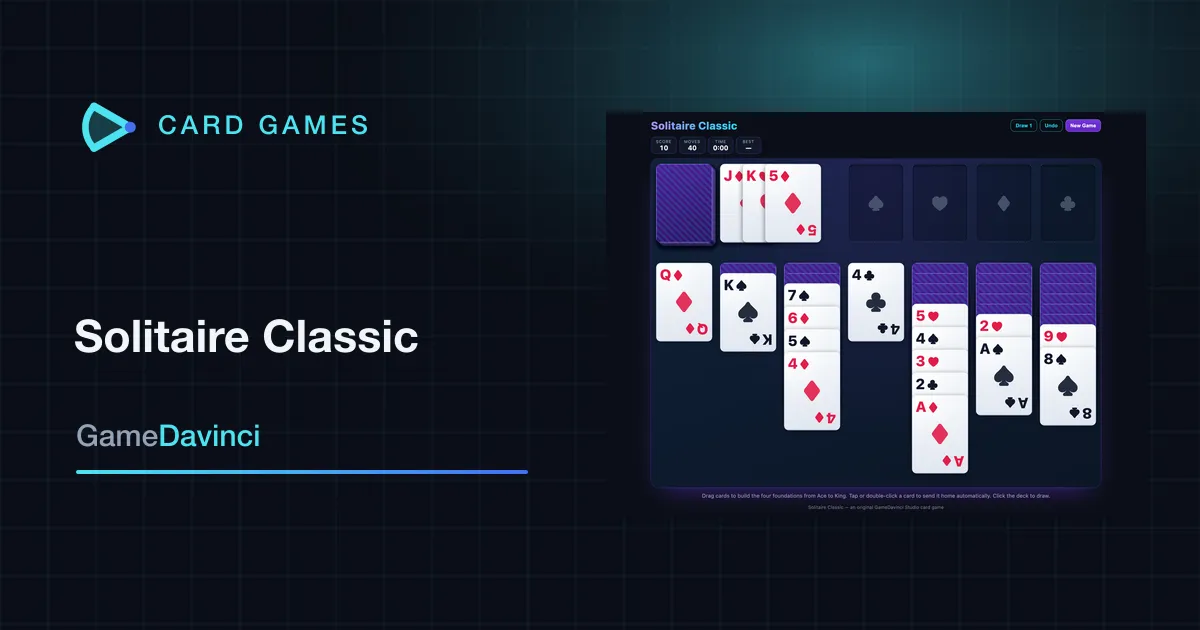
Solitaire Classic
The timeless one-player card game — build all four suits from Ace to King and clear the table.
Card Games -
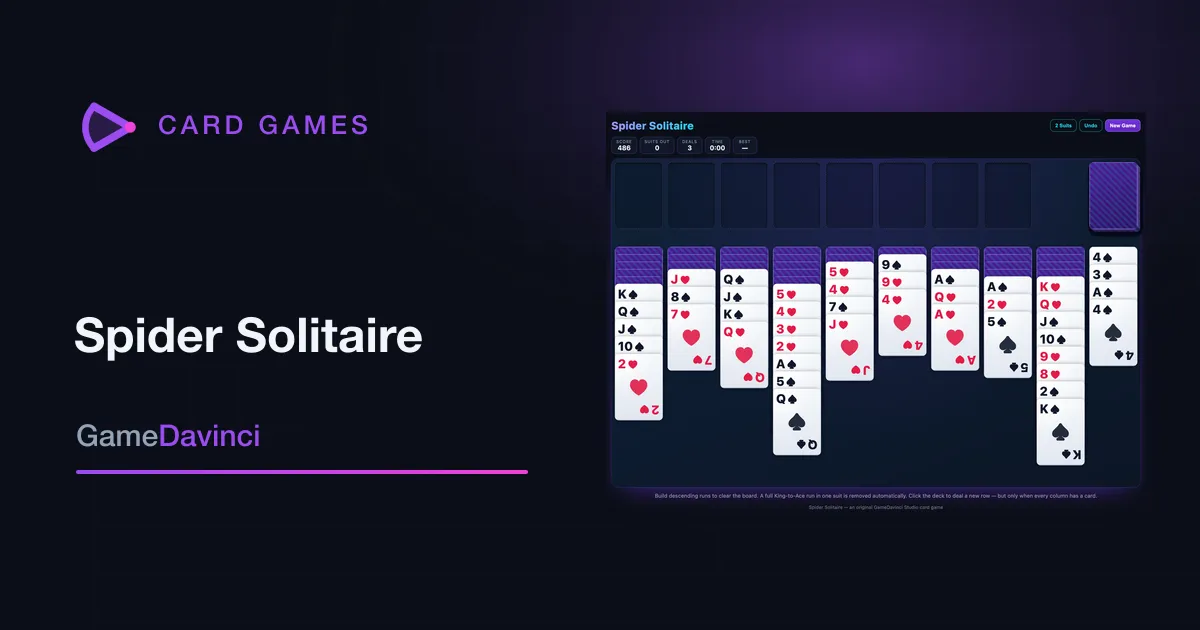
Spider Solitaire
Two packs, ten columns, eight suits to clear — the deep end of solitaire, in one, two or four suits.
Card Games -
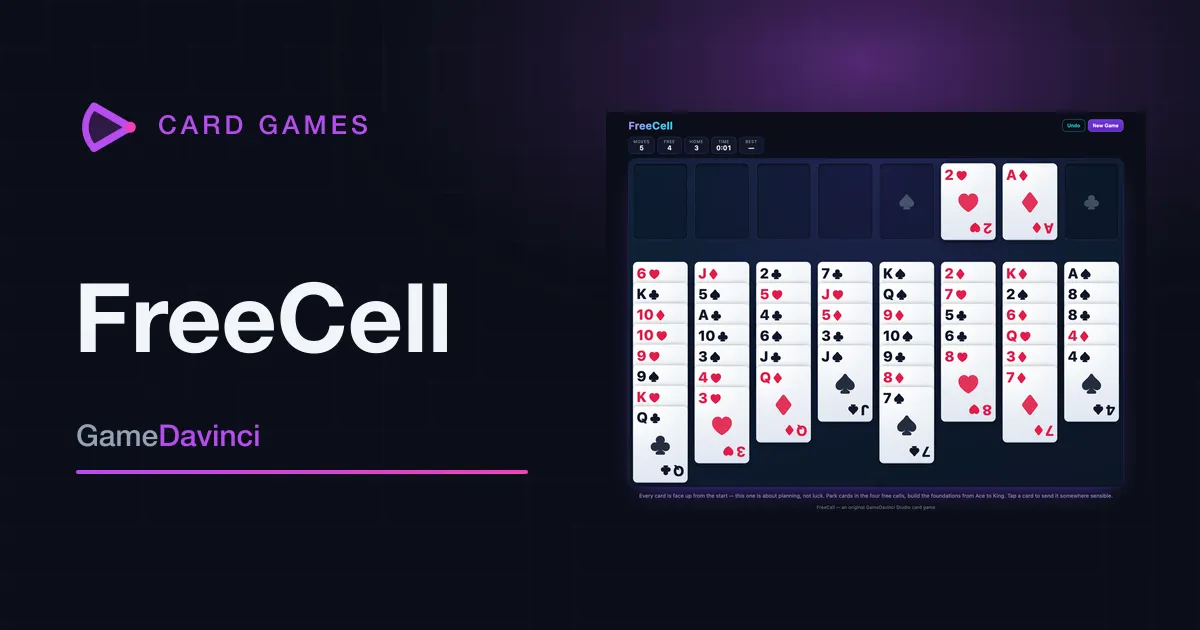
FreeCell
Every card face up from the start — the solitaire that is pure planning, with almost no unwinnable deals.
Card Games -

TriPeaks Solitaire
Three overlapping peaks, 28 cards, one waste pile — and a chain bonus that pays more for every card you take without touching the deck.
Card Games