How to play Dominoes
Match your tiles to the open ends of the train, empty your hand first, and be the first to a hundred points.
This is the draw game, played with a standard double-six set: twenty-eight tiles running from the double blank to the double six, each carrying two numbers. It is the version most people mean when they say "dominoes".
The deal
In a two-player game each player takes seven tiles. With three or four players each takes five. Whatever is left forms the boneyard, face down, and it stays in play — this is a draw game, so the boneyard is a resource rather than a leftover.
Whoever holds the highest double leads it, and that tile starts the train.
Playing a tile in dominoes
The train has two open ends, each showing a number. On your turn you add a tile with a matching number at one of those ends. Doubles are laid across the line in the usual way but do not change how the train branches — this is a single line with two ends throughout.
You must play if you can. There is no option to hold a tile back for a better moment.
If nothing in your hand matches either end, you draw from the boneyard, and you keep drawing until you find a tile you can play. Only when the boneyard is completely empty may you pass.
How scoring works in dominoes
The round ends when somebody plays their last tile. That player scores the total number of pips left in every other hand — so a round won while an opponent still holds the double six is worth a great deal more than one won against a nearly empty hand.
If nobody can move and the boneyard is empty, the round is blocked. The player holding the fewest pips wins it and scores everyone else's pips on the same terms. A tie for fewest scores nothing at all.
First player to a hundred points wins the match.
What a pass tells you
This is the part of dominoes that turns it from luck into a game.
Because you must play when you can, and must draw until you can, a player who passes has proved something: the boneyard is empty and they hold neither of the open numbers. That information is permanent and it is free.
From that moment you know one end you can safely keep feeding them, and one you should avoid opening. Strong play in this game is mostly bookkeeping — remembering who has passed on what, and steering the ends towards numbers your opponents have already denied.
The computer opponents use exactly the same information against you. Pass on a five and they will keep the fives coming.
How the computer decides
Nobody can see anybody else's tiles, so the computer does not pretend to. It guesses the hidden hands many times over, plays each guess out to the end of the round, and picks the tile that pays best on average across all of them. It narrows those guesses with the passes and draws it has seen, which is why it stops feeling random after the first few turns.
Controls
Tap a highlighted tile to play it. If it fits both ends you are asked which.
- Draw and Pass appear only when the rules allow them.
- Drag the train to scroll it.
Strategy tips
- Lead your heaviest tiles early. Pips left in your hand are points for whoever goes out, so a double six still sitting there at the end is the most expensive tile in the set.
- Count what has passed. A player who passed on a four does not hold a four, and that fact stays true for the rest of the round — it is the single most valuable thing to remember.
- Steer the ends towards numbers your opponents cannot match. Once you know somebody is out of threes, keeping a three open is worth more than playing a big tile.
- Watch which numbers you hold most of. If four of your tiles carry a five, keeping a five open keeps you playable and everyone else guessing.
- Do not empty your hand of a suit you are using to stay flexible. Being unable to match either end means drawing, and drawing hands your opponents information about you.
- In a blocked round, the target changes. Once nobody can move it is the lightest hand that wins, so start shedding pips rather than playing for the go-out.
- Keep at least one double you can dump. Doubles are the hardest tiles to place, and a double stranded in your hand at the end costs double its number in pips.
- Late in a round, count the tiles that have been played to work out what your last opponent can hold. With most of the set face up, the remaining hand is usually deducible rather than guessable.
Now play Dominoes
Free, in your browser, with no download and no sign-up.
Play Dominoes →Dominoes is a board game and a longstanding classic. See all board games or browse the whole catalogue .
More rules and guides
-
 Featured
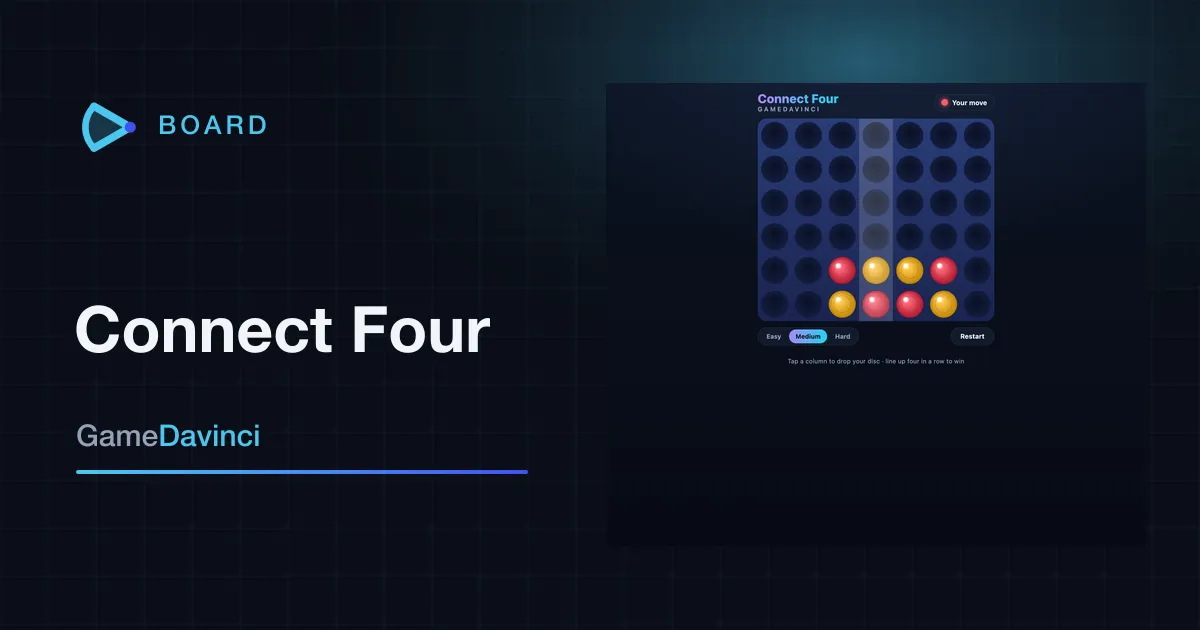
Connect Four
Drop your discs and be the first to line up four in a row against a computer that actually plans ahead.
Board -
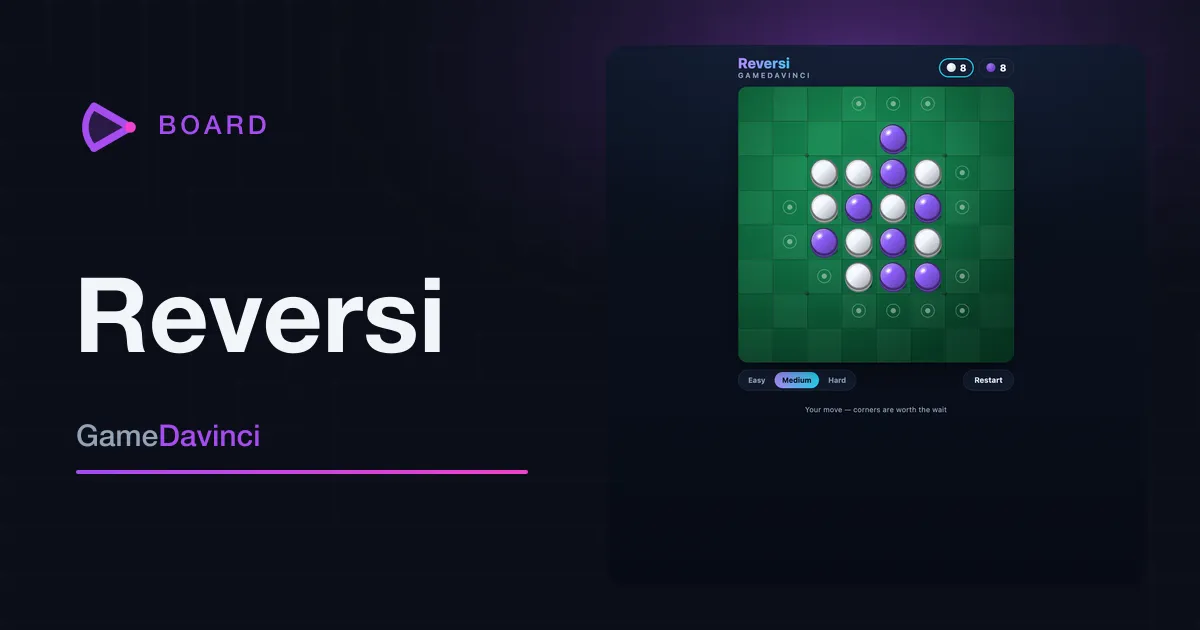
Reversi
Outflank the computer to flip its discs to your colour and own the most of the board when it fills.
Board -

Checkers
Jump and crown your way to victory in classic draughts against a computer that hunts for every capture.
Board -
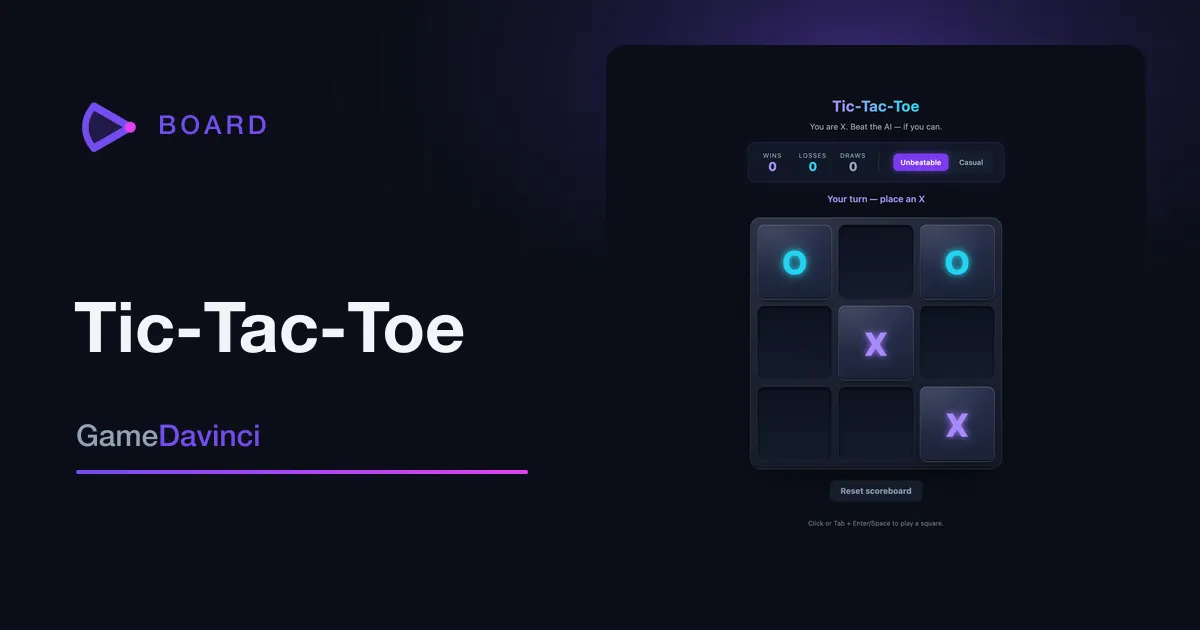
Tic-Tac-Toe
The timeless 3-in-a-row duel — take on an AI that never loses, or dial it back to casual.
Board