How to play Mini Crossword
A free daily 5x5 crossword you can finish over a coffee. Ten clues, one grid, a new puzzle every day and a streak to keep.
Mini Crossword is a daily five-by-five crossword. It follows the same rules as a full-size newspaper crossword, shrunk to a grid you can finish in a couple of minutes, and a new puzzle arrives every day at midnight in your local time.
The grid
The grid has five rows and five columns. Most squares are white, where letters go; a few are black and simply separate words. The black squares are arranged symmetrically, so the grid looks the same if you turn it upside down, which is the convention in American-style crosswords.
An entry is a run of white squares reading left to right (across) or top to bottom (down). Every entry is at least three letters long, and in this game every white square belongs to both an across entry and a down entry. That is called a fully checked grid, and it means no letter can only be found from one clue: if you are stuck on a word, the words crossing it can always give it to you.
Numbers and clues
A square gets a number if an across entry, a down entry or both start there. Numbers run left to right along each row, top row first. Clue 1-Across belongs to the entry starting at square 1 and reading across; 1-Down starts at the same square if a down entry begins there too.
Each clue describes its answer, and the answer always fits the clue's form. A plural clue has a plural answer, a past-tense clue has a past-tense answer, and a clue with a blank such as "___ and cheese" wants the missing word. A clue ending in a question mark is playful: the answer fits a pun or a second meaning rather than the plain one.
What the answers can be
Every answer is an ordinary English word of three, four or five letters, taken from a list of common words. There are no abbreviations, no names of people or places, no foreign words and none of the rare words crosswords are sometimes forced to use, such as old units or obscure rivers. Common words that appear often have several different clues, used in turn.
Solving and checking
The puzzle is solved when every white square holds the right letter. You do not need to press anything: the moment the last letter is correct the grid lights up and your time stops. If every square is filled and at least one letter is wrong, you are told so, and you can keep correcting.
Help offers two tools, each for the selected square, the current word or the whole grid. Check marks wrong letters with a slash and leaves right ones alone. Reveal fills in the correct letter and marks it with a small blue corner; revealed letters cannot be changed.
Time, clean solves and streaks
The clock starts with your first letter and pauses if you switch to another tab. A solve where you never used Check or Reveal is a clean solve, and only clean solves can set your fastest time. Your streak counts the days in a row you have finished the daily puzzle, with or without help. Older puzzles from the archive, and puzzles opened from a friend's link, are practice: they never change your streak or your times.
Vocabulary
Across and down are the two directions of entries. A crossing is a square shared by an across and a down entry. Fill is the set of answers in a grid. A checked square is one that belongs to two entries.
Controls
Tap a square to select it; tap it again, or tap the clue bar, to switch between across and down. Type with the on-screen keys or your keyboard.
Keyboard
- Letters fill the selected square and move the cursor on, skipping squares you have filled.
- Backspace clears a square, or steps back if it is already empty.
- Arrow keys move around the grid, and the first press turns the cursor to face that way.
- Tab or Enter jumps to the next clue with a gap, Shift + Tab to the previous one.
- Space switches between across and down.
Touch
- The arrows either side of the clue bar step through the clues.
- Help, top right, checks or reveals a square, a word or the whole grid.
Strategy tips
- Start with the short entries. Three-letter answers have the fewest possibilities, and every letter you place is a free hint for the word crossing it.
- Read every clue once before filling anything, and write in the ones you are sure of first. A mini rewards breadth more than depth.
- Match the form of the clue. A plural clue usually means the answer ends in S, and a past-tense clue often ends in ED, which gives you a letter before you know the word.
- When a word will not come, solve its crossings instead. In a fully checked grid every letter you need is also part of another entry.
- Treat a question mark as a warning that the obvious meaning is wrong. Think of puns, second meanings and phrases.
- Use Check word rather than Reveal when you are unsure of one letter. It tells you which squares are wrong without giving away the answer, and the time it saves is usually worth it.
- Go fast on the second pass. Once half the grid is filled, most remaining answers are readable from their letters alone.
Now play Mini Crossword
Free, in your browser, with no download and no sign-up.
Play Mini Crossword →Mini Crossword is a word game . See all word games or browse the whole catalogue .
More rules and guides
-
 Featured
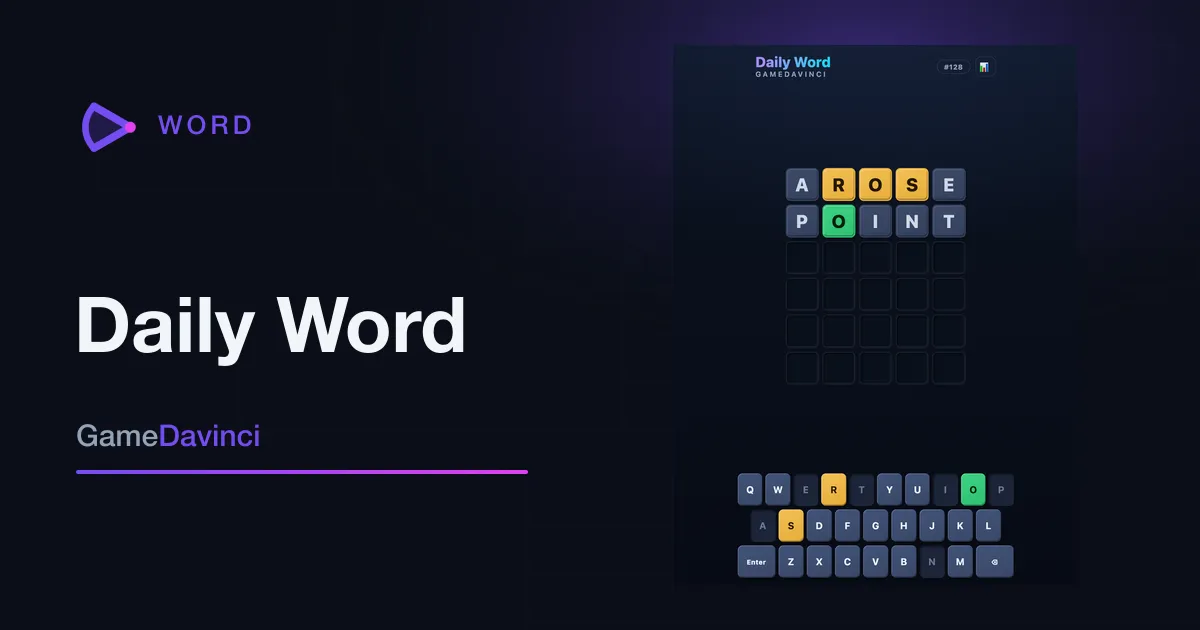
Daily Word
Guess the secret five-letter word in six tries. One fresh puzzle every day — come back to keep your streak alive.
Word -
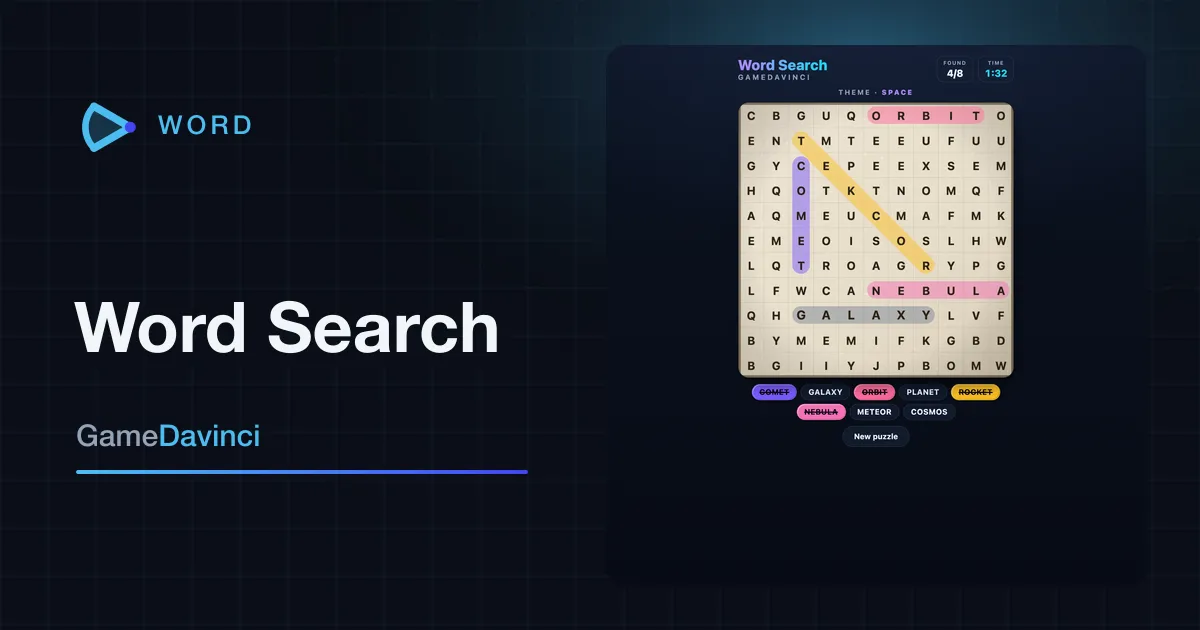
Word Search
Hunt hidden words in a letter grid — across, down, and diagonally, forwards or back — against the clock.
Word -
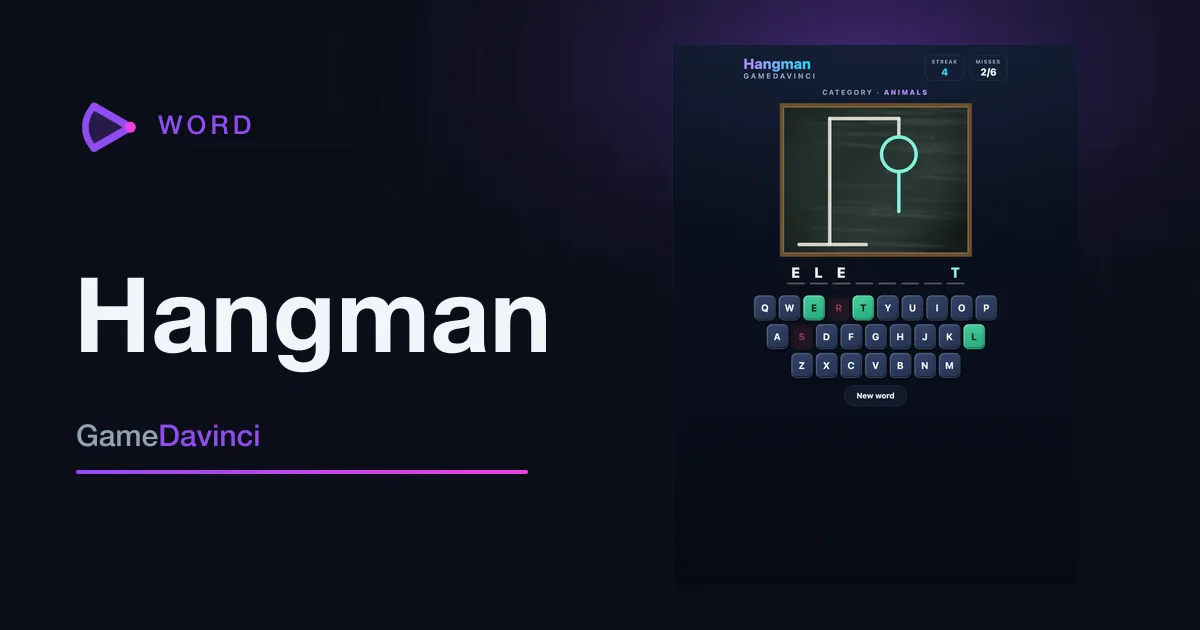
Hangman
Guess the hidden word one letter at a time — six wrong guesses and the round is over.
Word -
Word Storm
Type the falling words to blast them out of the sky before they land — a typing test disguised as an arcade game.
Word