Killer Sudoku
Sudoku with no given digits. The grid is carved into dashed cages, each labelled with the total of its squares, and every puzzle has exactly one answer.
About this game
Killer Sudoku starts with an empty grid. Not a sparse one — an empty one. There is not a single digit printed on the board, and there is nothing to copy down before you begin. What you get instead is a partition. The 81 squares are carved into dashed cages of two to seven squares, and each cage carries one small number in its corner: the total of the digits inside it. A cage never repeats a digit, and the ordinary Sudoku rules still apply on top — one to nine in every row, every column and every three-by-three box. Those three rules together are enough to pin down exactly one grid, and the first move is the interesting part. With nothing given, you cannot start by looking at a digit; you start by looking at a total. A two-square cage adding to seventeen can only be eight and nine. A three-square cage adding to six can only be one, two and three. And because every row, column and box holds one to nine, each of them sums to forty-five — so a row whose cages account for thirty-nine leaves six for whatever spills over the edge. That last observation is the whole opening, and once you have seen it work you have the game. Every board here is generated fresh and proved before it is dealt. The proof is not a search: the generator solves the grid the way you would, with cage combinations, singles, the rule of forty-five and the rest, and only deals a board that logic alone finishes. That is a stronger promise than "one answer exists", because a puzzle with one answer nobody can reason their way to is not a puzzle. You will never need to guess and you will never hit a dead end that was not your own mistake. The three difficulties are honest for the same reason. A board is Medium because the Easy techniques genuinely do not finish it, and Hard because the Medium ones do not — measured, on that board, by taking the techniques away and watching the solve stop. Nothing is graded by how many clues it has, because there are no clues. There is a pencil-notes mode, an undo, a hint if you want one, and a clock. Cages turn teal when they are complete and correct and red the moment they cannot be, so a wrong turn shows itself early rather than eighty squares later. It runs in any browser, on a phone or a desktop, with nothing to install and no sign-up.
Controls
Pick a square, then type a digit or tap the pad.
Keyboard
- 1–9 writes a digit into the selected square.
- Arrow keys move the selection, and wrap round at the edges.
- Backspace or Delete clears the square.
- N toggles pencil-notes mode, U undoes, H takes a hint.
Touch
- Tap a square to select it, then tap a digit on the pad below or beside the grid.
- Tap the same digit again to clear the square, or use the Erase key.
- The Notes button turns the pad into pencil marks.
How to play
Fill every square with one to nine so that no digit repeats and every cage adds to its corner number. There are no given digits.
The three rules
- Each row, column and three-by-three box holds one to nine, once each.
- Each dashed cage adds up to the small number in its top-left corner.
- A cage never repeats a digit, even where the squares are in different rows, columns and boxes.
Getting started
- Look for cages whose total leaves only one combination: a two-square cage of three is one and two, a four-square cage of thirty is nine, eight, seven and six.
- Every row, column and box adds to forty-five. Add up the cages that sit wholly inside one, and the difference is what the leftover squares must total.
- A leftover square on its own is a free digit. That is usually where the first answer comes from.
Finishing
- A cage turns teal when it is complete and correct, and red as soon as it cannot be.
- The puzzle is done when the grid is full, nothing clashes, and every cage is exact.
More games like this
 Featured
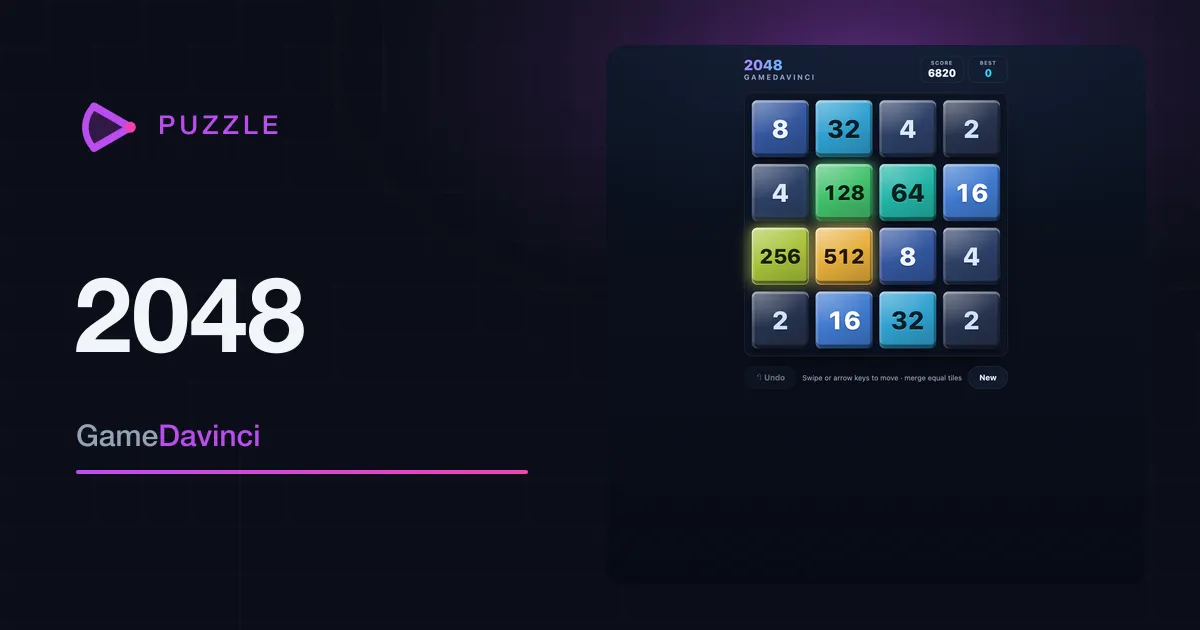
2048
Slide the numbered tiles, merge matching pairs, and chase the elusive 2048 tile — one more move never hurts.
Puzzle
Gem Match
Swap two touching gems to line up three or more, then watch the chain reactions cascade for bigger scores.
Puzzle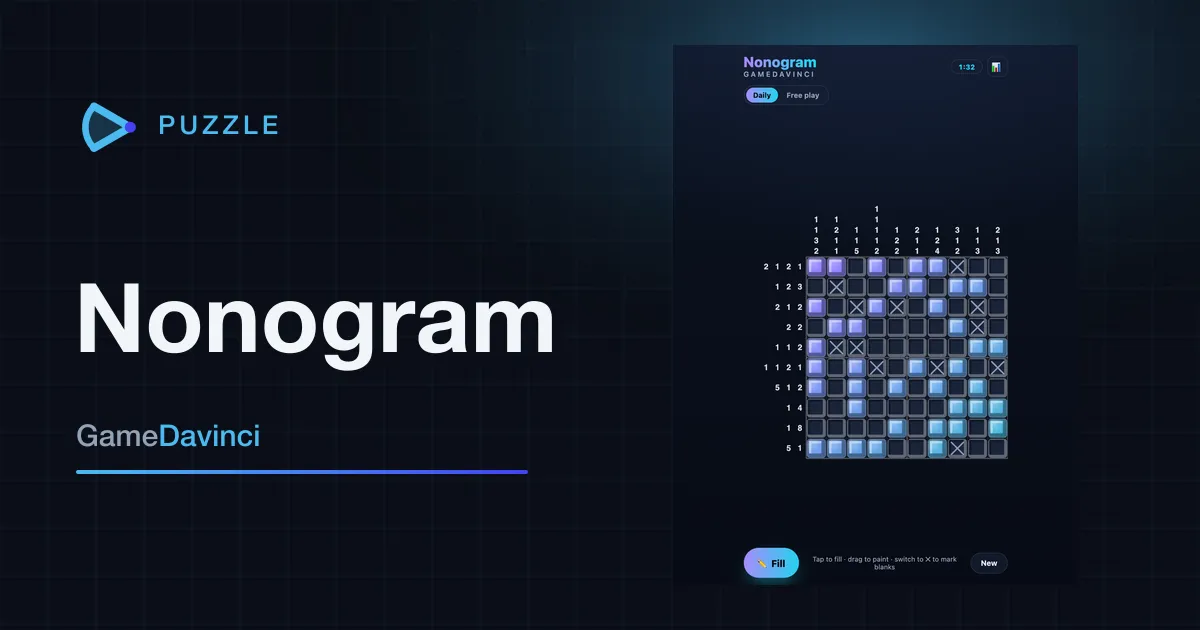 Featured
Nonogram
Use the number clues to figure out which squares to fill and reveal the hidden picture — one new puzzle daily.
Puzzle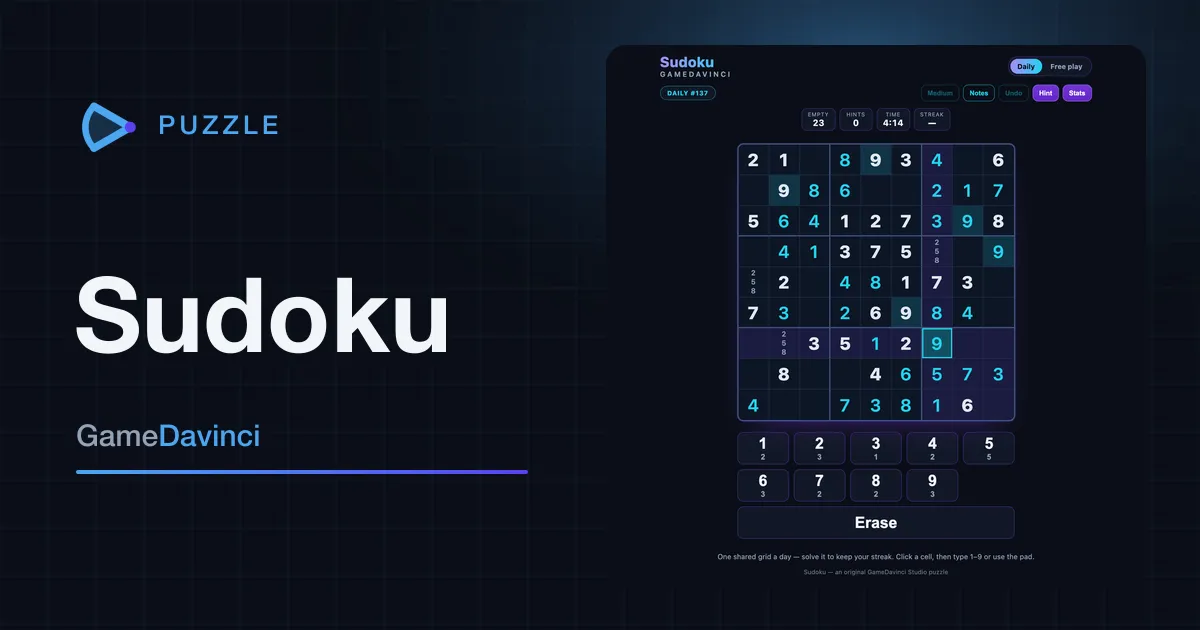
Sudoku
The classic number puzzle, now with a daily challenge — fill the grid so every row, column and box holds one to nine.
Puzzle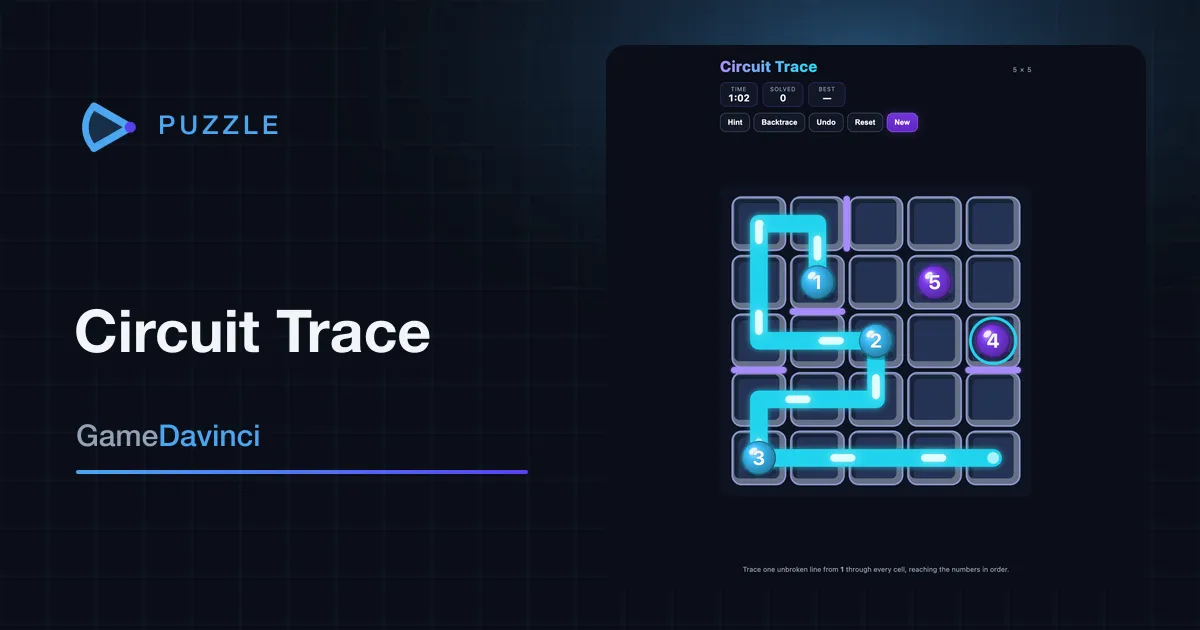 Featured
Circuit Trace
Draw one unbroken line that reaches every numbered node in order — and fills every last cell.
Puzzle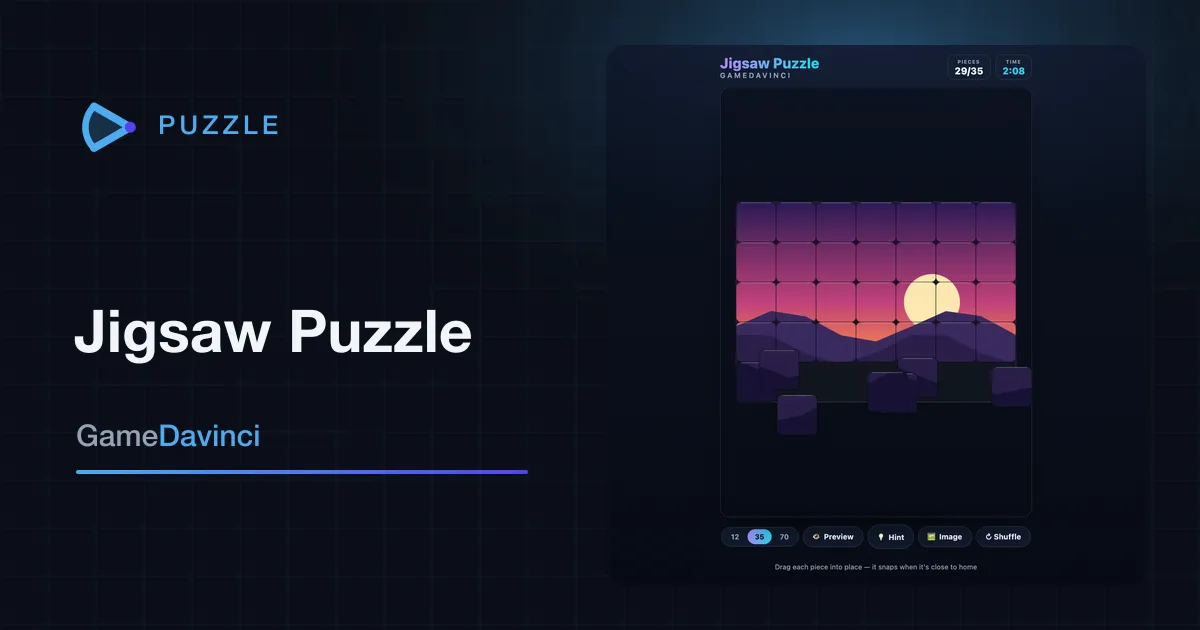
Jigsaw Puzzle
Drag the scattered pieces into place to rebuild the picture — pick 12, 35, or 70 pieces to match your mood.
Puzzle
Memory Match
Flip the neon cards, remember the pairs, and clear the board in as few moves as you can.
Puzzle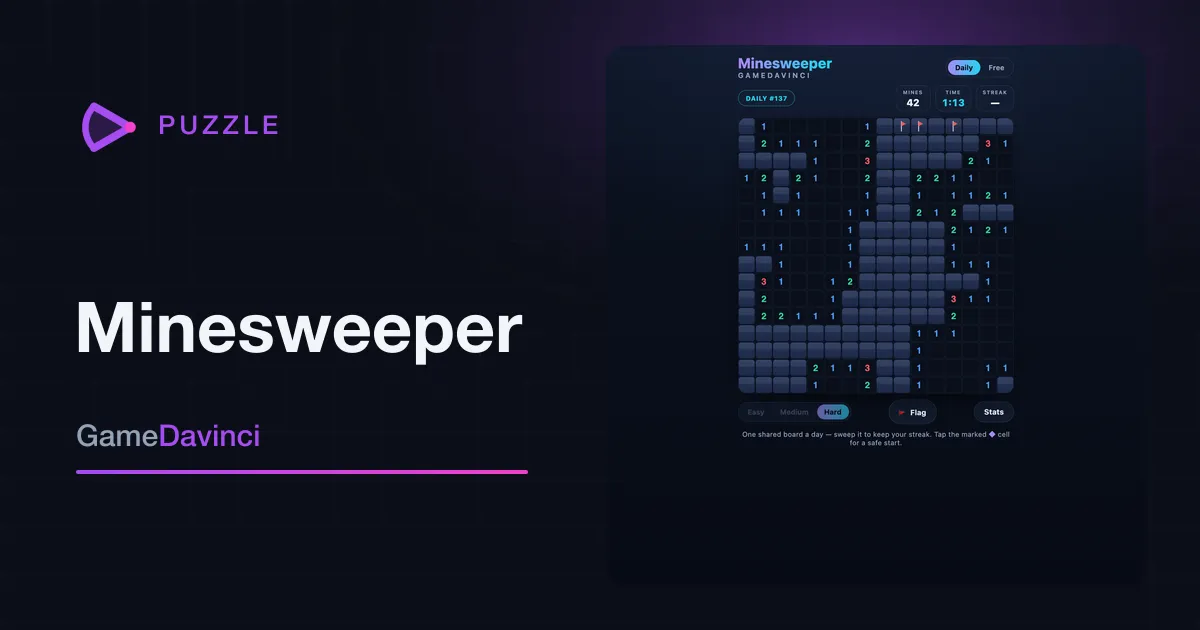
Minesweeper
The logic classic, now with a daily challenge — clear the grid without hitting a mine, guided only by the numbers.
Puzzle