How to play Circuit Trace
Draw one unbroken line that reaches every numbered node in order — and fills every last cell.
Circuit Trace is a route puzzle built on one demanding rule: draw a single unbroken line that reaches the numbered nodes in order and passes through every cell on the board exactly once.
Not most cells. Every one.
The rules in full
The line starts at node 1 and must visit node 2, then node 3, and so on in ascending order.
It moves between adjacent cells, never diagonally. It cannot cross itself, cannot skip a cell, cannot enter a cell twice, and cannot pass through a wall.
Walls are never decoration. Every wall exists to rule out a wrong route, so a wall in an odd place is telling you something about the intended answer.
The puzzle is solved when the line ends on the last numbered node with the whole grid filled.
Why filling the grid is the hard half
Connecting the numbers in order is easy. Connecting them in order while consuming every square is a different problem entirely, and it is the reason the obvious route between two nodes is almost never the correct one.
The direct path from 1 to 2 leaves the cells around it unvisited, and since the line can never come back through a cell it has used, those cells have to be swept up on the way — which usually means the route from 1 to 2 should wander deliberately, hugging the edges and filling the corners it passes.
Learning to read a board backwards is the skill: not "how do I get there" but "what will be stranded if I go that way".
Dead ends, and how to see them coming
A cell with only one unused neighbour is a dead end. The line has to enter and leave every cell except the two endpoints, so a cell with a single way in and out can only ever be the final cell — and if it is not the final cell, the puzzle is already lost.
That gives you a cheap running check. Scan for cells with one free neighbour as you draw; if one appears and it is not your endpoint, undo.
Corners deserve special attention for the same reason. A corner has only two neighbours to begin with, so as soon as one of them is used the corner is forced.
The parity trick
On many boards you can colour the grid like a chessboard and count. A path that alternates colours every step must have a particular balance of light and dark cells, so if the counts do not work out, no solution exists through that route. It is worth knowing this exists even if you never count it deliberately — it explains why some routes feel wrong before you can say why.
Undo
Drag backwards along your own line, or press Z, to undo. This is a planning puzzle rather than a dexterity one, so backing out of a route is a normal part of solving rather than a failure.
Controls
Drag from node 1 to draw the trace; drag back along it to erase.
Keyboard
- Arrow keys or WASD to extend.
- Z or Backspace to step back.
Strategy tips
- Plan the whole route before you commit. The easy path between two numbers is usually the one that strands a cell twenty moves later.
- Fill the corners and edges early. They have the fewest neighbours, so they are the first cells to become unreachable, and the last cells you want to be chasing.
- Watch for cells with only one free neighbour. Every cell except the endpoint must be entered and left, so a one-way cell that is not your finish means you have already gone wrong.
- Read the walls as clues. Every one is placed to rule out a wrong answer, so a wall in an odd spot is telling you what the intended route is not.
- Make the line wander deliberately between numbers. Filling the grid is the real constraint, and a direct connection almost never does it.
- Look ahead to the next number before finishing this leg. Arriving at node 3 from the wrong side can make node 4 unreachable.
- Undo early and often. Backing out three cells now is cheaper than discovering the mistake at the far end of the board.
- Treat an isolated pocket of empty cells as a failure state. Once the line has sealed a region off, no route can reach it and the board is already lost.
Now play Circuit Trace
Free, in your browser, with no download and no sign-up.
Play Circuit Trace →Circuit Trace is a puzzle game . See all puzzle games or browse the whole catalogue .
More rules and guides
-
 Featured
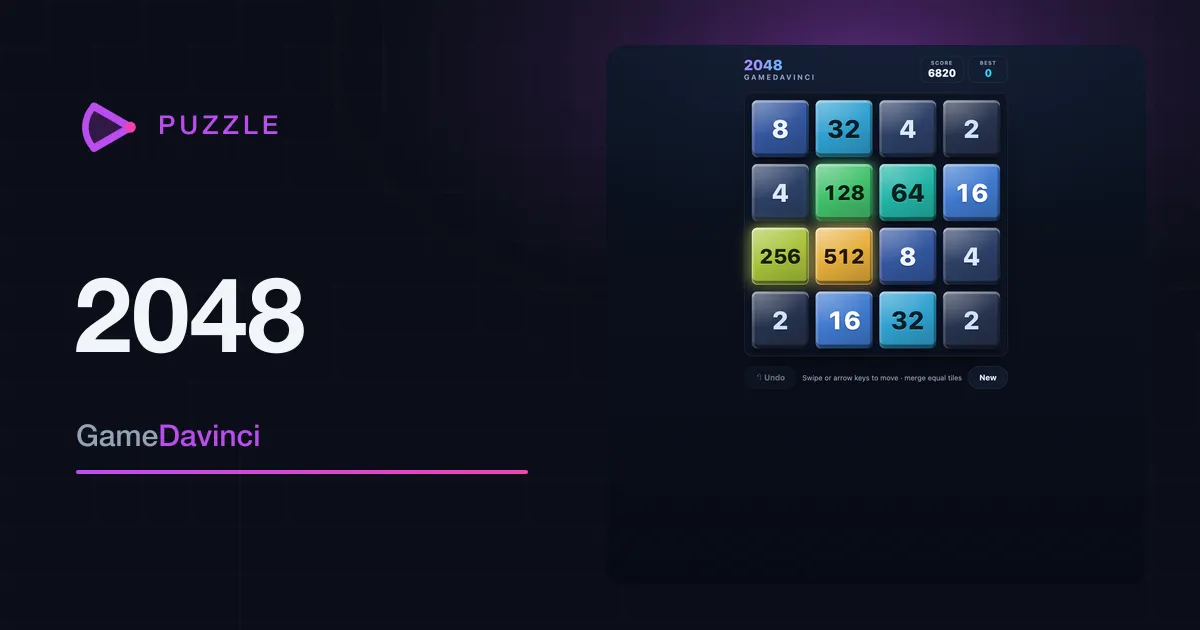
2048
Slide the numbered tiles, merge matching pairs, and chase the elusive 2048 tile — one more move never hurts.
Puzzle -

Gem Match
Swap two touching gems to line up three or more, then watch the chain reactions cascade for bigger scores.
Puzzle -
 Featured
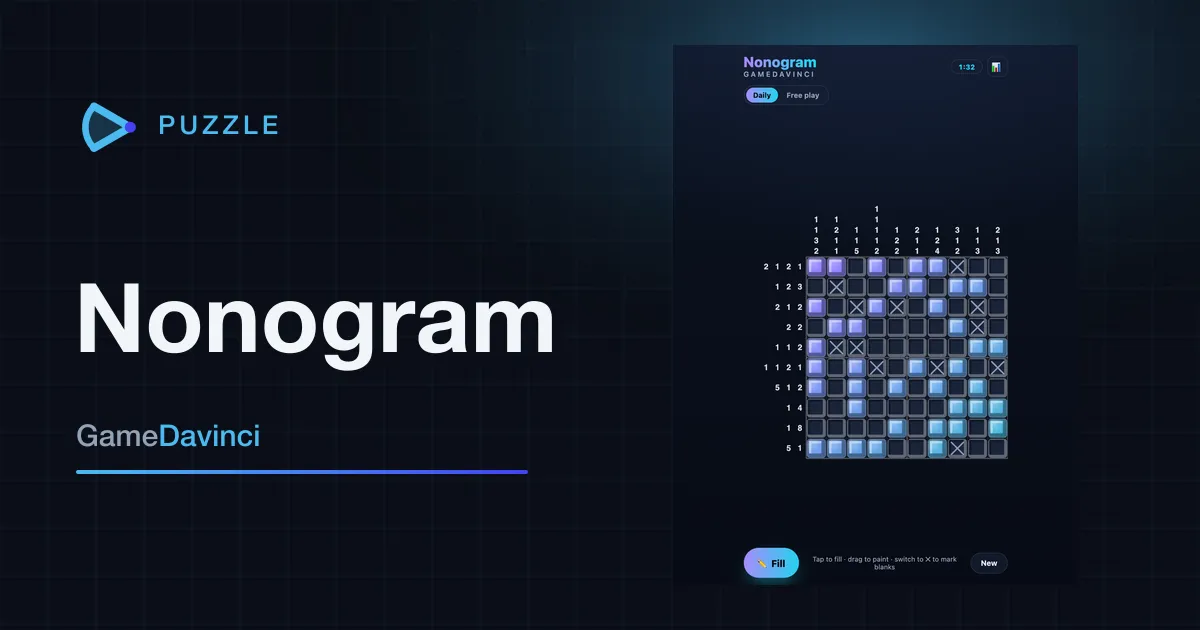
Nonogram
Use the number clues to figure out which squares to fill and reveal the hidden picture — one new puzzle daily.
Puzzle -

Sudoku
The classic number puzzle, now with a daily challenge — fill the grid so every row, column and box holds one to nine.
Puzzle