How to play 2048
Slide the numbered tiles, merge matching pairs, and chase the elusive 2048 tile — one more move never hurts.
2048 is a sliding puzzle disguised as a score chase, and it has a property most players never notice: it is far more constrained than it looks. Understanding what the board is actually doing turns a game that ends around 512 by luck into one that reaches 2048 reliably.
What a move really does
A move slides every tile as far as it can go in one direction, then merges pairs. Two things about the merge are easy to get wrong. First, a tile that has already merged this move cannot merge again on the same move — a row of 2-2-2-2 becomes 4-4, not 8. Second, merges resolve from the far edge inward: 4-4-8 slid left becomes 8-8, not 4-16. Both rules matter for planning, because they make chains predictable rather than chaotic.
The spawn
After every move that changes the board, exactly one new tile appears in a random empty cell: a 2 with 90% probability, a 4 with 10%. A move that changes nothing is not a move — no tile spawns and no time passes — which is what makes a blocked direction free to attempt.
Why the corner strategy works
Because the largest tile can only be consumed by an equal tile, it is dead weight, and every move that shifts it wastes the space around it. Pinning it in a corner and building a descending row toward it means your merges always resolve *into* the big tile rather than around it. The cost is a discipline: once you commit to a corner you must never make a move in the direction that would pull the largest tile out of it.
How the game ends
The board is lost when it is full and no two adjacent tiles are equal in any direction. Note that a full board is not itself a loss — a full board with a single adjacent pair still has a move. Almost every real loss is caused by one move in the forbidden direction opening a gap that the random spawn fills with a 2 in the wrong place.
Winning, and continuing
Producing a 2048 tile wins. The game does not have to end there; the board carries on, and 4096 and 8192 are reachable with the same technique and more patience. The score is the running sum of every merge value produced, so a 2048 tile is worth far more than a 1024 twice over.
Controls
Swipe or use the Arrow keys (or WASD) to slide all tiles in that direction.
- Matching tiles that collide merge into one.
- Undo reverses your last move (or press Z).
Strategy tips
- Pick one corner and never leave it. Bottom-left is conventional; what matters is that you commit.
- Use only two directions as your workhorses — left and down for a bottom-left corner — and treat the third as an occasional tool.
- Never press the fourth direction (up, for a bottom-left corner). One press is how almost every lost game starts.
- Keep the bottom row filled and descending: 1024-512-256-128 reads as a ladder where every merge cascades.
- Merge small tiles aggressively in the upper rows. Clutter is the real enemy; empty cells are what let you recover from a bad spawn.
- If the bottom row is full and stuck, work the second row until a pair lines up beneath it rather than breaking the row.
- Undo is there for the move that broke the corner — use it the instant you notice, not three moves later.
Now play 2048
Free, in your browser, with no download and no sign-up.
Play 2048 →2048 is a puzzle game . See all puzzle games or browse the whole catalogue .
More rules and guides
-
Gem Match
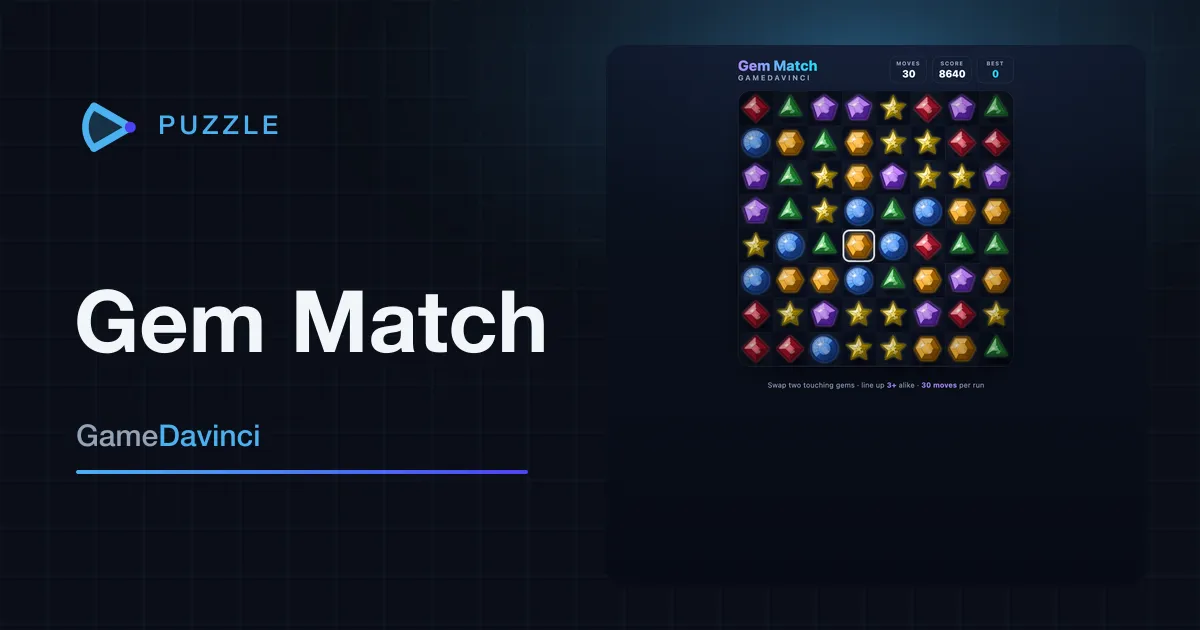
Swap two touching gems to line up three or more, then watch the chain reactions cascade for bigger scores.
Puzzle -
 Featured
Nonogram
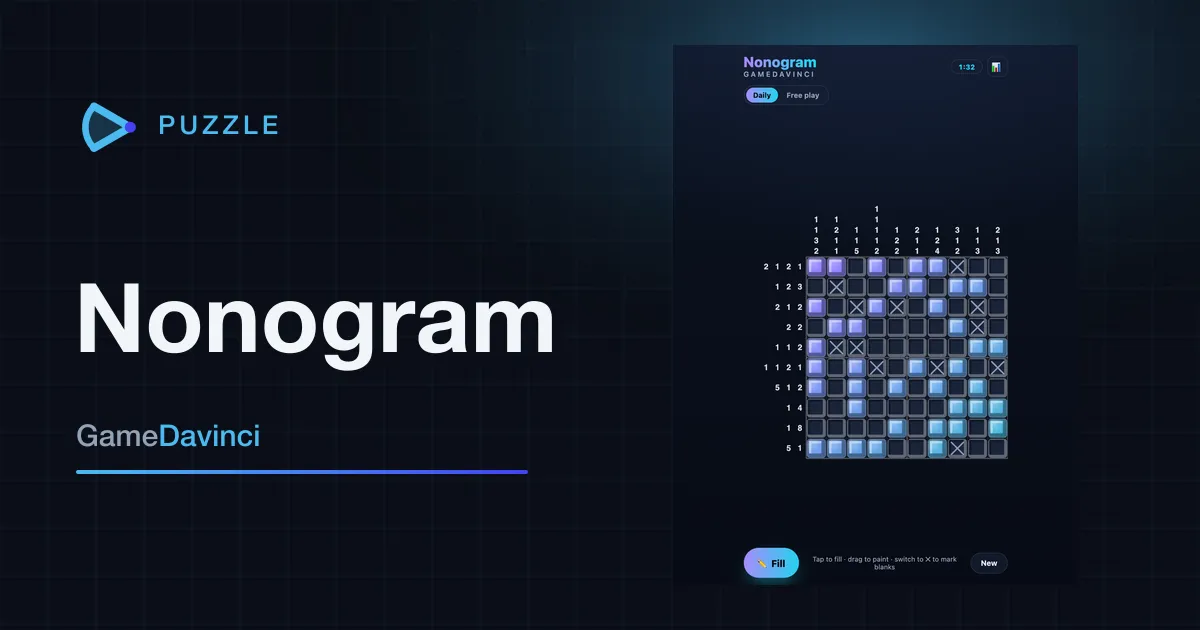
Use the number clues to figure out which squares to fill and reveal the hidden picture — one new puzzle daily.
Puzzle -
Sudoku
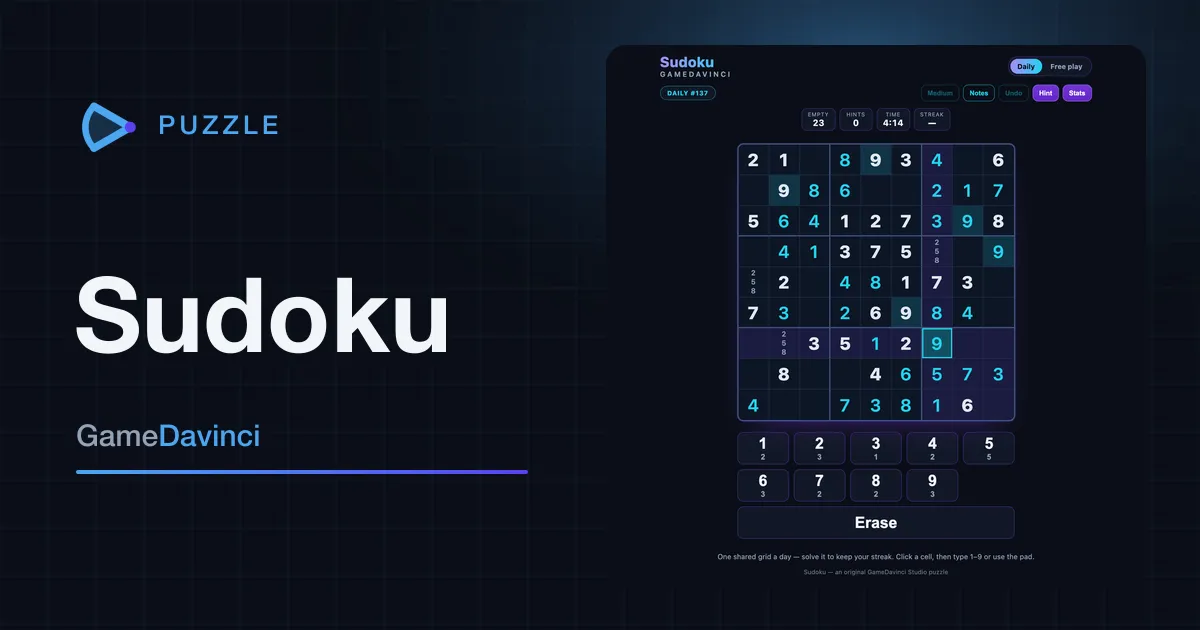
The classic number puzzle, now with a daily challenge — fill the grid so every row, column and box holds one to nine.
Puzzle -
 Featured
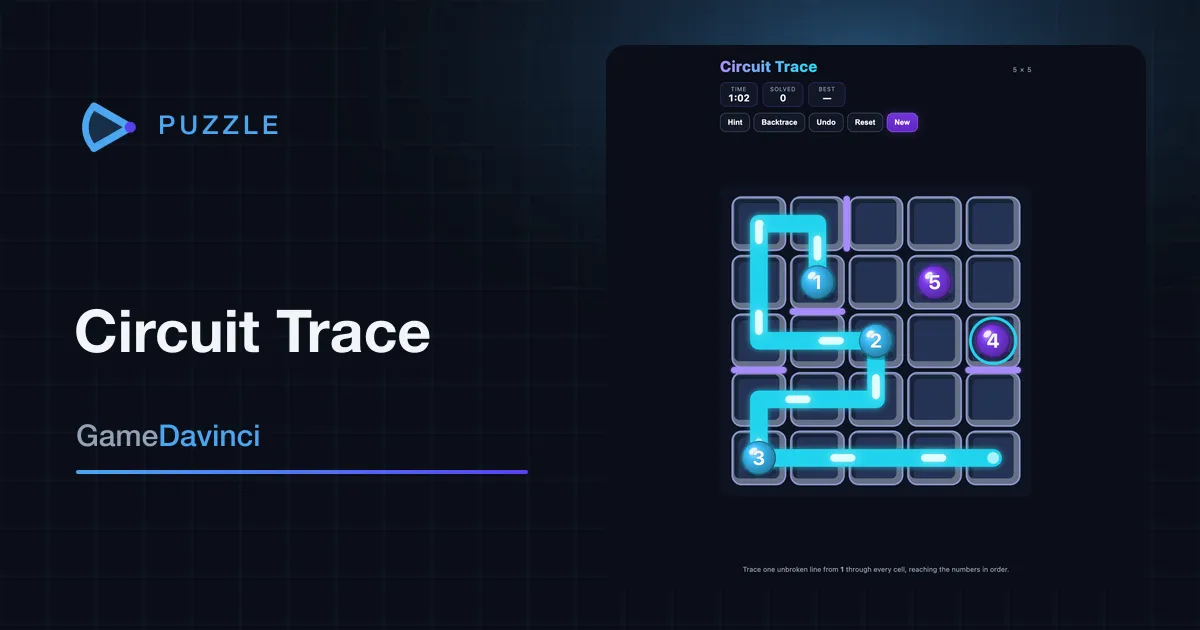
Circuit Trace
Draw one unbroken line that reaches every numbered node in order — and fills every last cell.
Puzzle