How to play Sudoku
The classic number puzzle, now with a daily challenge — fill the grid so every row, column and box holds one to nine.
Sudoku has one rule and a great deal of technique. This page is about the technique, because "each row, column and box holds 1 to 9 once" tells you what a finished grid looks like without telling you how to get there — and every well-formed puzzle can be finished by pure deduction.
What "one solution" guarantees you
A proper sudoku has exactly one solution reachable by logic. That guarantee is a tool, not a formality: if you have found a chain of reasoning that forces a digit, you never need to check the alternative, and if you find yourself guessing, there is a deduction available that you have not spotted yet.
The two ways to place a digit
Every technique reduces to one of two questions. *Last remaining cell*: within one row, column or box, does this digit have exactly one place left to go? *Last possible digit*: for this one cell, has every digit but one been eliminated by its row, column and box? Beginners tend to scan only the second. Most easy puzzles fall entirely to the first, and scanning a digit at a time across the whole grid is far faster than staring at one cell.
Pencil marks and pairs
Write the candidates into a cell once it has three or fewer. Then the standard patterns become visible. A *naked pair* is two cells in the same unit holding the same two candidates — those two digits belong to those two cells, so they can be struck from every other cell in that unit. A *hidden pair* is the mirror image: two digits that can only go in the same two cells, so every other candidate in those two cells is wrong. Naked and hidden triples work identically with three.
Pointing and claiming
If, within one box, a candidate is confined to a single row, then that digit must be somewhere in that row inside the box — so it can be eliminated from the rest of the row outside it. This is *pointing*. Run the same argument the other way — a candidate confined within a row to a single box can be cleared from the rest of that box — and it is *claiming*. Between them these two unlock most puzzles graded medium and hard.
Difficulty, and what it really measures
A puzzle's difficulty is not the number of givens. It is which technique is required at the hardest step: easy puzzles need only single-cell scanning, medium adds pairs, hard requires pointing, claiming and locked candidates. A grid with 26 clues can be easier than one with 30.
The daily grid
The daily puzzle is the same grid for everyone, generated from the date, so a streak is a real comparison rather than a private score. Free play deals unlimited puzzles across four difficulties when you want practice rather than a record.
Controls
Click or tap a cell, then type 1-9 or use the number pad.
Keyboard
- Notes mode pencils in candidates. Arrow keys move, Backspace clears.
- N notes, U undo, H hint.
Strategy tips
- Scan digit by digit, not cell by cell. Pick a 7, look at every box, and ask where it can go — this finds far more placements per minute than examining cells.
- Fill in pencil marks only once a cell is down to two or three candidates. Marking everything early creates noise you then have to maintain.
- When a digit appears seven or eight times already, place the remaining ones first — those are the cheapest deductions on the board.
- Look for naked pairs before anything more advanced. They are common, easy to spot, and each one usually cascades.
- Never guess. If you are stuck, you have missed an elimination — re-scan the boxes with the fewest empty cells.
- After every placement, immediately clear that digit from its row, column and box. Stale candidates are the main cause of contradictions later.
- If you reach a contradiction, do not restart. Undo back to your last uncertain step; the error is almost always a single mis-eliminated candidate.
Now play Sudoku
Free, in your browser, with no download and no sign-up.
Play Sudoku →Sudoku is a puzzle game . See all puzzle games or browse the whole catalogue .
More rules and guides
-
 Featured
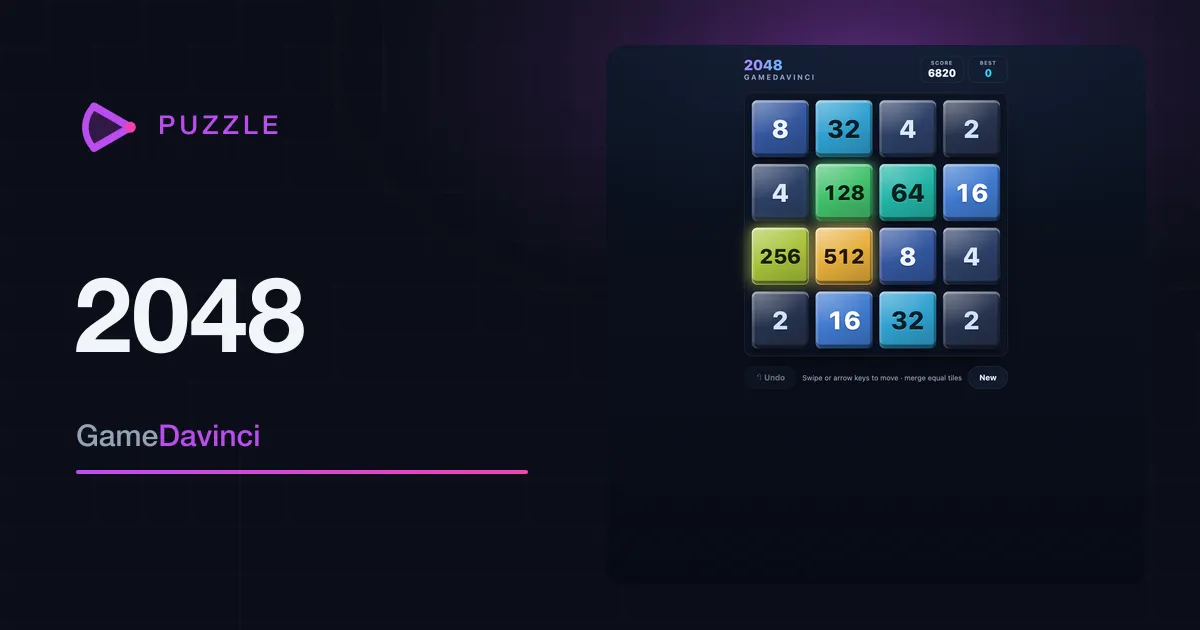
2048
Slide the numbered tiles, merge matching pairs, and chase the elusive 2048 tile — one more move never hurts.
Puzzle -

Gem Match
Swap two touching gems to line up three or more, then watch the chain reactions cascade for bigger scores.
Puzzle -
 Featured
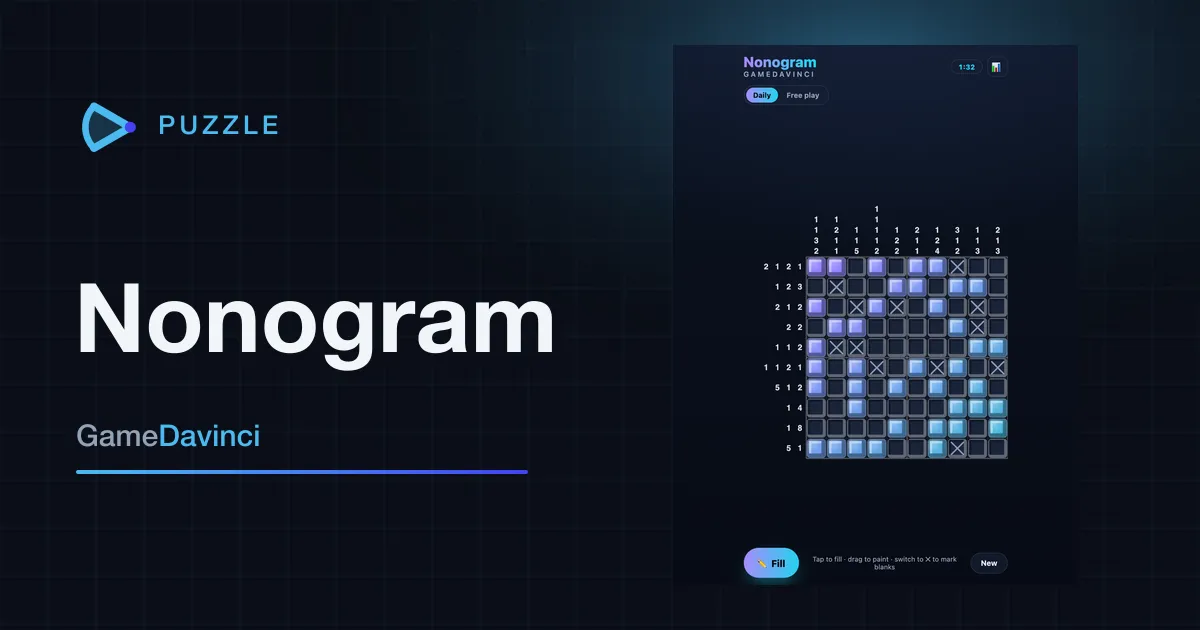
Nonogram
Use the number clues to figure out which squares to fill and reveal the hidden picture — one new puzzle daily.
Puzzle -
 Featured
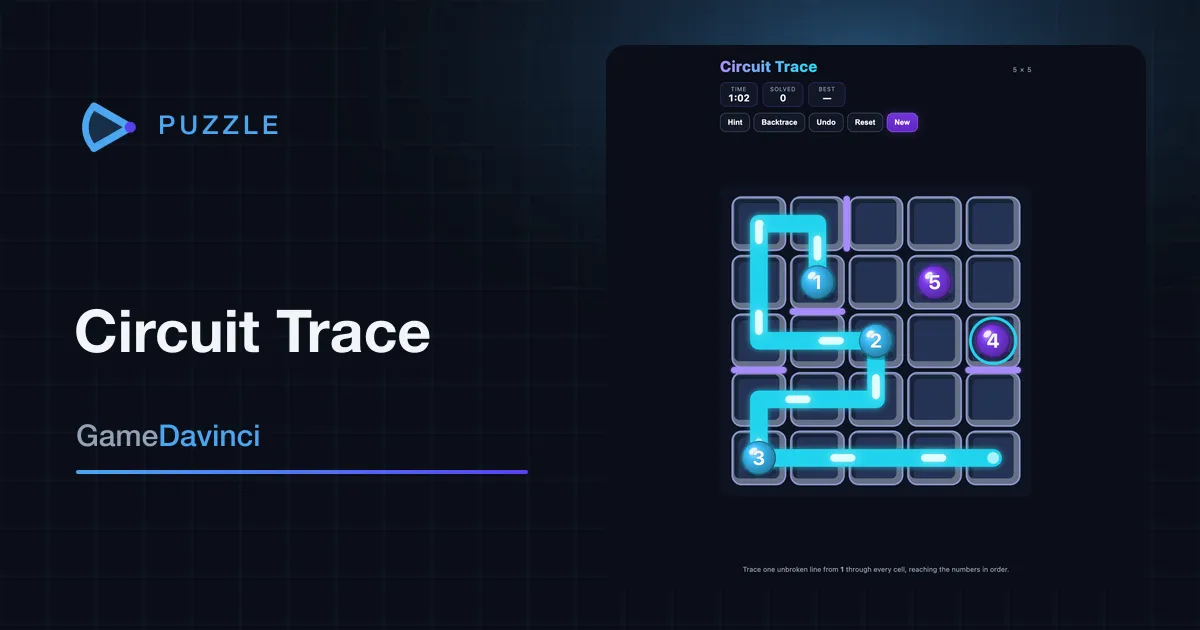
Circuit Trace
Draw one unbroken line that reaches every numbered node in order — and fills every last cell.
Puzzle