How to play Daily Atlas — Country Deduction
One country a day, six guesses. Every guess answers with how far away it is and which way to go, so you can find it without already knowing where it is.
Daily Atlas is a deduction puzzle built out of geography rather than a geography quiz, and the difference between those two things is the entire design.
The problem with geography quizzes
A quiz asks what you already know. If you know it you answer in four seconds and if you do not you leave. There is no middle, no working out, and nothing to get better at except memorising more.
This gives you a target you almost certainly cannot name and then hands you enough information to find it anyway. Every guess answers with three things: the great-circle distance to the answer in kilometres, the compass direction you would travel to reach it, and how close that leaves you as a percentage of the furthest you could possibly be.
That is enough. A solver using nothing but those answers — no map, no knowledge, only the numbers the game prints — finds every country in the atlas inside the six guesses allowed, and usually inside four. Whether you can do it as fast is a matter of practice, but the information is there, and it is there for every single target.
Reading the answers
The distance is a true great-circle distance between country centres, so it is symmetrical and it does not care about borders or oceans.
The arrow is the initial bearing, rounded to one of eight directions. It is the direction you would set off in, not the direction the answer lies on a flat map — on long journeys near the poles those differ, which is a real thing about the world rather than a quirk of the game.
The percentage is one minus the distance over half the Earth's circumference. Ten percent means you are most of a world away. Ninety percent means you are close enough that only a handful of countries qualify.
The method
Open with anything central; the first answer eliminates most of the planet by itself. Then guess in the direction the arrow points, roughly as far as the distance says. The second answer usually cuts the possibilities to a region, because very few countries sit at both of those two distances at once.
By the third guess you are normally choosing between neighbours, and the arrow tells you which one. The common mistake is guessing somewhere you think is right rather than somewhere that splits the remaining possibilities — a guess that can only confirm what you already believe learns you nothing.
The compass
Above the board, each guess is drawn as a line from the centre at its true bearing, its length set by how far off it was. A near miss is a short line; a guess from the far side of the world is a long one. Five lines all pointing inward is what a solved puzzle looks like before you have solved it.
The day
One country a day, the same one for everybody. It is drawn from a shuffled order rather than picked at random, which matters more than it sounds: a random pick repeats inside a fortnight, and a player who is handed the same country twice in a month stops believing the puzzle was built rather than sampled. A shuffle cannot repeat until every country in the atlas has had its turn.
The day rolls over at your local midnight. Streaks count consecutive days solved.
The share
Finishing gives you a block of squares and arrows. The squares show how close each guess was and the arrows show which way it pointed. There are no country names and no distances in it, so it spoils nothing, and there are no words in it at all, so it reads the same in every language.
Controls
Type a country name and press Guess. The box suggests names as you type.
Keyboard
- Type any part of a country's name; a unique prefix is enough.
- Enter submits the guess.
Strategy tips
- Open from the middle of the world rather than from home. A guess in central Africa or the Middle East splits the planet more evenly than one in your own country, and a first guess that eliminates half of everything is worth two that do not.
- Guess to learn, not to be right. The best second guess is often a country you are confident is wrong, placed where it divides the remaining possibilities.
- Trust the distance over the arrow when they seem to disagree. Distance is exact; the arrow is rounded to one of eight directions and near the poles it points somewhere counterintuitive.
- Use the percentage as a shortlist filter. Above about ninety percent you are within roughly two thousand kilometres, which is usually a single region.
- When two guesses give similar distances, the answer is roughly on the line between where those two circles cross. That is two places on the globe, and the arrows tell you which.
- Island nations are the ones people miss. If the numbers point into open ocean, look for the island rather than assuming you misread.
- Large countries read closer than they feel because the distance is measured to the middle. Russia, Canada and Brazil will seem nearer than their borders suggest.
- Do not spend a guess on a neighbour of a country you already tried unless the arrow has changed. Two adjacent countries usually return almost the same answer and you will have learned nothing.
- If you are stuck at four guesses with a good percentage, name the largest country in that region rather than the one you find most interesting. Big targets are more likely and cost the same.
Now play Daily Atlas — Country Deduction
Free, in your browser, with no download and no sign-up.
Play Daily Atlas — Country Deduction →Daily Atlas — Country Deduction is a puzzle game . See all puzzle games or browse the whole catalogue .
More rules and guides
-
 Featured
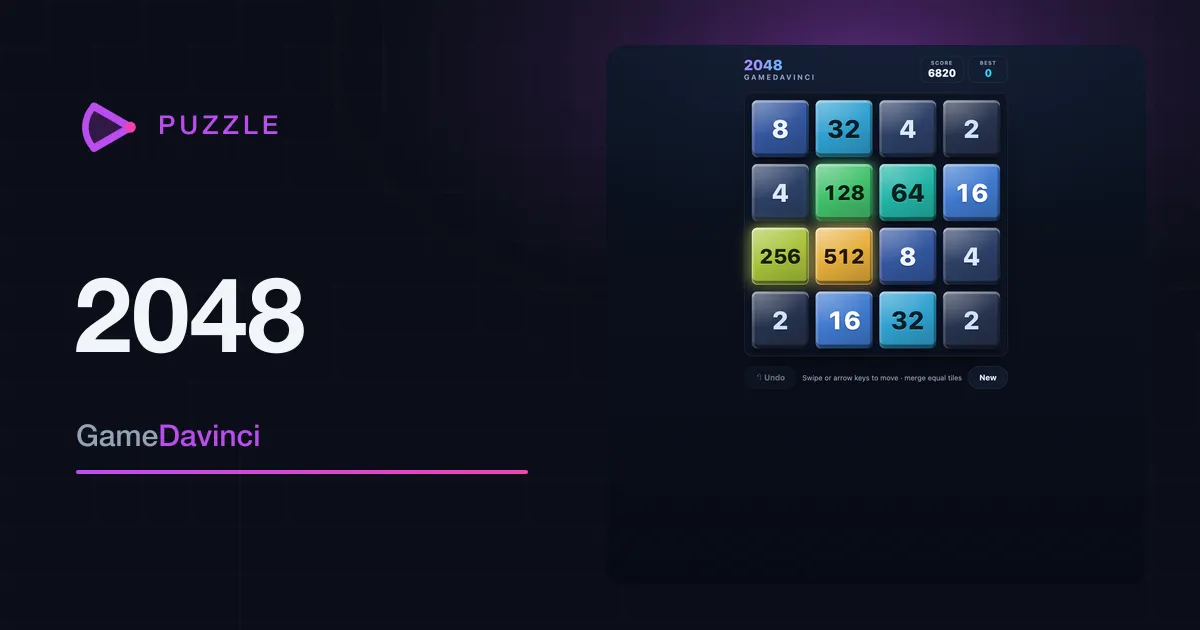
2048
Slide the numbered tiles, merge matching pairs, and chase the elusive 2048 tile — one more move never hurts.
Puzzle -
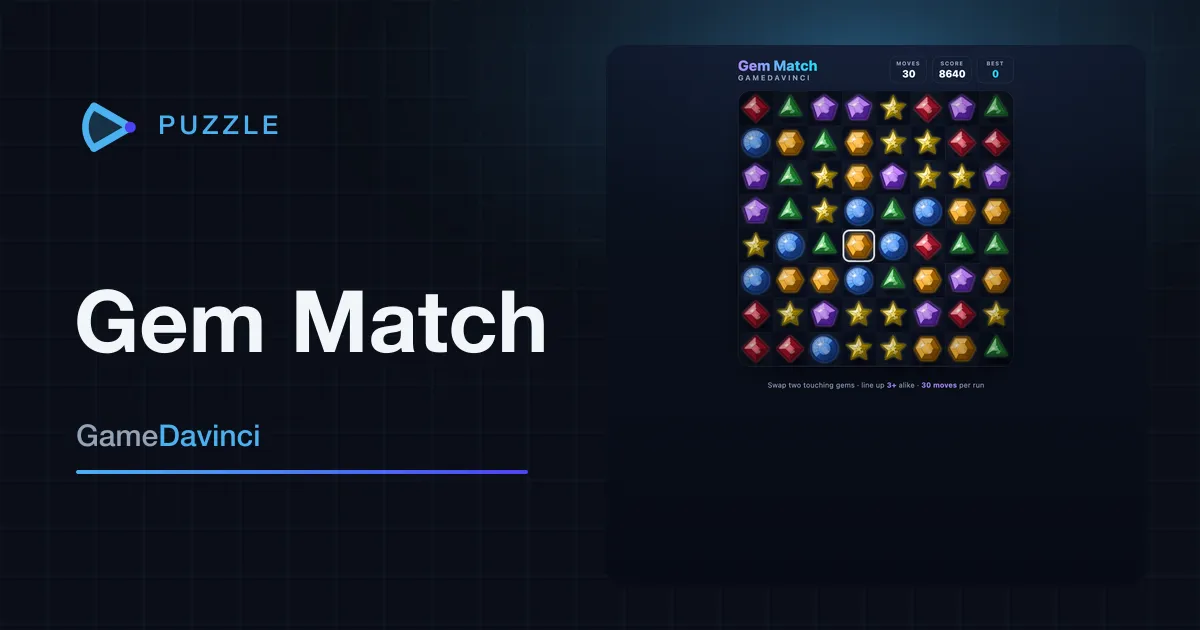
Gem Match
Swap two touching gems to line up three or more, then watch the chain reactions cascade for bigger scores.
Puzzle -
 Featured
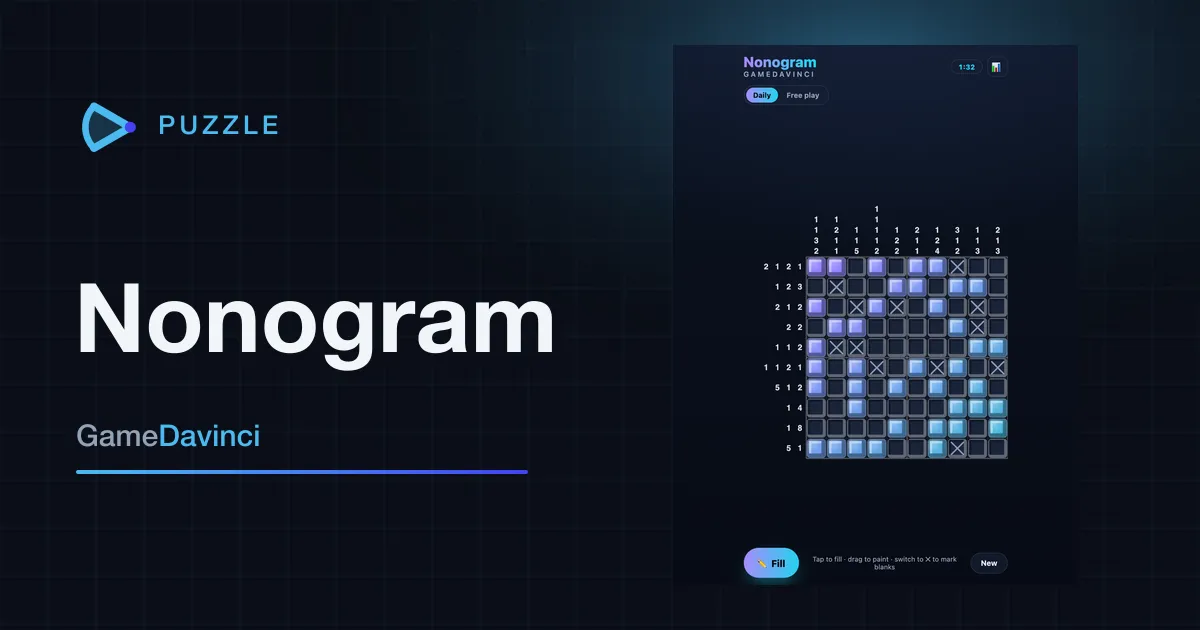
Nonogram
Use the number clues to figure out which squares to fill and reveal the hidden picture — one new puzzle daily.
Puzzle -
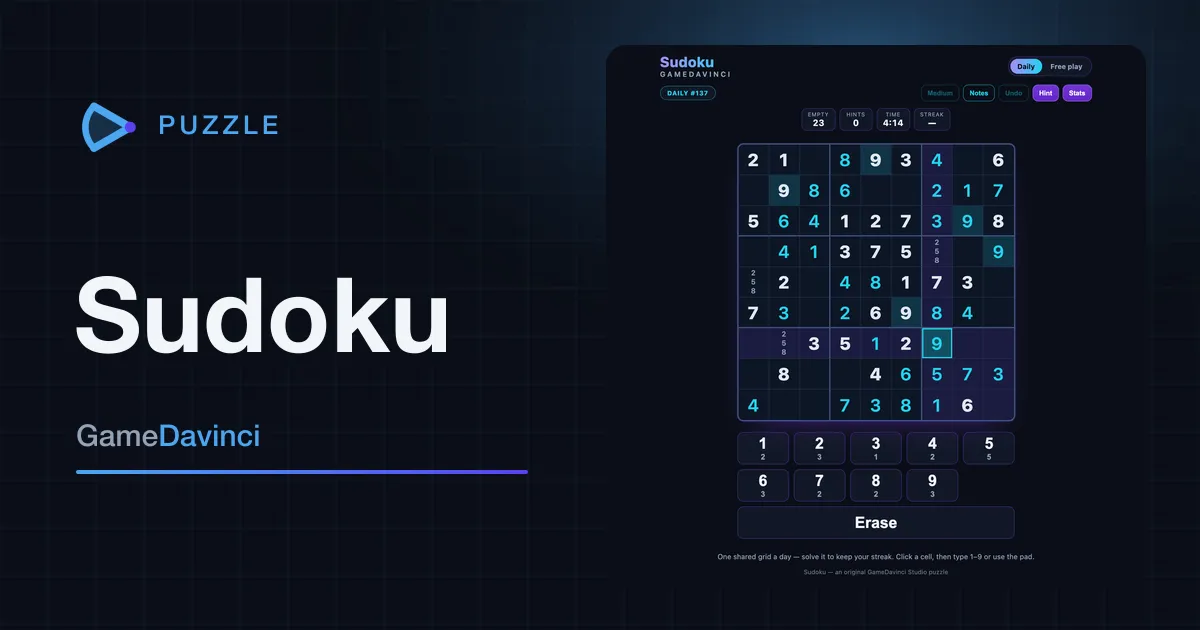
Sudoku
The classic number puzzle, now with a daily challenge — fill the grid so every row, column and box holds one to nine.
Puzzle