How to play Daily Loop
Draw one closed loop along the grid lines so every numbered cell has exactly that many of its sides used. One answer, always reachable by logic.
Slitherlink — the puzzle this game is built on — is pure deduction. Nothing is hidden, nothing is random, and no board here needs a guess. Everything follows from two rules.
The two rules
Every numbered cell must finish with exactly that many of its four sides drawn as part of the loop. Not at least, not at most — exactly. A cell with no number in it is under no such constraint, and a large part of the puzzle is working out what those blank cells must be doing.
The drawn lines must form one single closed loop. It has no ends, so every dot the loop passes through has exactly two lines running into it and never one, three or four. And there is only one loop, not two.
The condition people forget
Satisfying every number is not the same as finishing the board. You can meet all of them and still be wrong, because what you have drawn is two separate rings rather than one.
This is worth taking seriously because it is not a rare edge case; it is a normal way to go astray on a bigger board, and the trap only springs at the very end. It is also usable as a tool rather than only a hazard. If closing a short circuit early would seal off a small ring that cannot reach the rest of what you have drawn, that closure is wrong, and ruling it out is often the deduction that opens a corner up.
The deductions that do the work
A 0 is the most useful number on the board despite promising nothing. It says all four of its sides are empty, and each of those crossings-out constrains a neighbouring cell.
A 3 in a corner is nearly as good, because the two sides on the outside of the board can often be settled immediately. Two 3s side by side force the line between them, plus the two outer sides of the pair; two 3s touching only at a diagonal force the two outer corners.
A 1 in a corner has both of its outer sides empty. A 2 in a corner forces one of them.
Most of all, count both ways. A cell is settled not only when it has all the sides it needs — every remaining side must then be crossed out — but also when it has been crossed out so far that the sides still open are exactly the number it wants. The second form is the one people under-use.
Every dot is a constraint too. A dot already carrying two lines can take no more, and a dot carrying one line must eventually take a second, so if three of its four directions are crossed out the fourth is forced.
What the difficulty labels mean
Not only grid size. Each board is rated by the hardest technique it genuinely forces, tested by switching that technique off and seeing whether the board still falls.
Easy and Medium boards can be finished by counting around the clues and applying the rules above. They differ from each other in size rather than in the reasoning they demand, which is the honest way to describe them.
Hard and Expert boards cannot. At some point you must assume a particular line is present, follow the consequences until something breaks — a number that can no longer reach its count, or a circuit that would close too early — and conclude the assumption was wrong.
What separates the two groups is how far the board has been carved. Every board starts with a number in every cell and clues are then removed one at a time; a board carved all the way down to minimal nearly always requires an assumption, and one left with more numbers can be reasoned out directly. Difficulty here is therefore not a label applied afterwards but the thing the generator is actually steering.
The guarantee
Two things are proved about every board before you see it. Exactly one loop satisfies it, re-checked after every single clue removal. And a solver restricted to the techniques above can reach that loop. Boards failing either test are discarded.
So if you are stuck, something on the board is deducible.
Hints, undo and the daily board
A hint reads the board as you have actually left it. It replays the reasoning from the start and offers the first step you have not already made, so the advice lands on what is still ahead of you. If you have drawn a line that is not part of the answer, it says so and marks it, rather than building advice on top of a mistake.
Undo steps back one line. Reset clears your drawing without changing the puzzle.
One board a day, the same for everybody. The week ramps: Monday and Tuesday are easy, Wednesday and Thursday medium, Friday and Saturday hard, and Sunday is an expert board. Solving extends your streak, solves finished without a single hint are counted separately, and the share text carries your time without giving anything away.
Controls
Tap the line between two dots to draw it, tap again to cross it out as definitely empty, and once more to clear it. Dragging along a run of lines marks them all the same way.
Keyboard
- Z undoes the last line.
- H asks for a hint.
- R clears the board without changing the puzzle.
Strategy tips
- Start with the zeros. A 0 gives you four crossed-out edges for free, and each one squeezes the cell next to it — they are worth more than the threes people rush to.
- Then work the edges and corners of the board. A 3 in a corner, a 1 in a corner and a 2 on the rim all settle sides immediately, because the outside of the board can carry no line.
- Look for two 3s side by side. The line between them is forced, and so are the far sides of both — one of the few patterns worth memorising outright.
- Cross out edges you have ruled out, every time. It feels like bookkeeping and it is actually the engine of the puzzle: a cell surrounded by crossings-out tells you where its lines must go.
- Count a cell both ways. It is finished when it has all the sides it needs, and equally when the sides still open are exactly as many as it wants.
- Use the dots as hard as you use the cells. A dot with two lines can take no more, and a dot with one line must find a second, so three crossings-out around it force the fourth direction.
- Watch for a circuit about to close too early. If joining two ends would seal a small ring that can never reach the rest of your drawing, that join is wrong — and knowing it is wrong is frequently the deduction you were missing.
- On Hard and Expert boards, when counting runs out, assume a line and chase it. Follow the consequences until a number cannot be met or a ring closes early, then rule the assumption out and carry on.
Now play Daily Loop
Free, in your browser, with no download and no sign-up.
Play Daily Loop →Daily Loop is a puzzle game . See all puzzle games or browse the whole catalogue .
More rules and guides
-
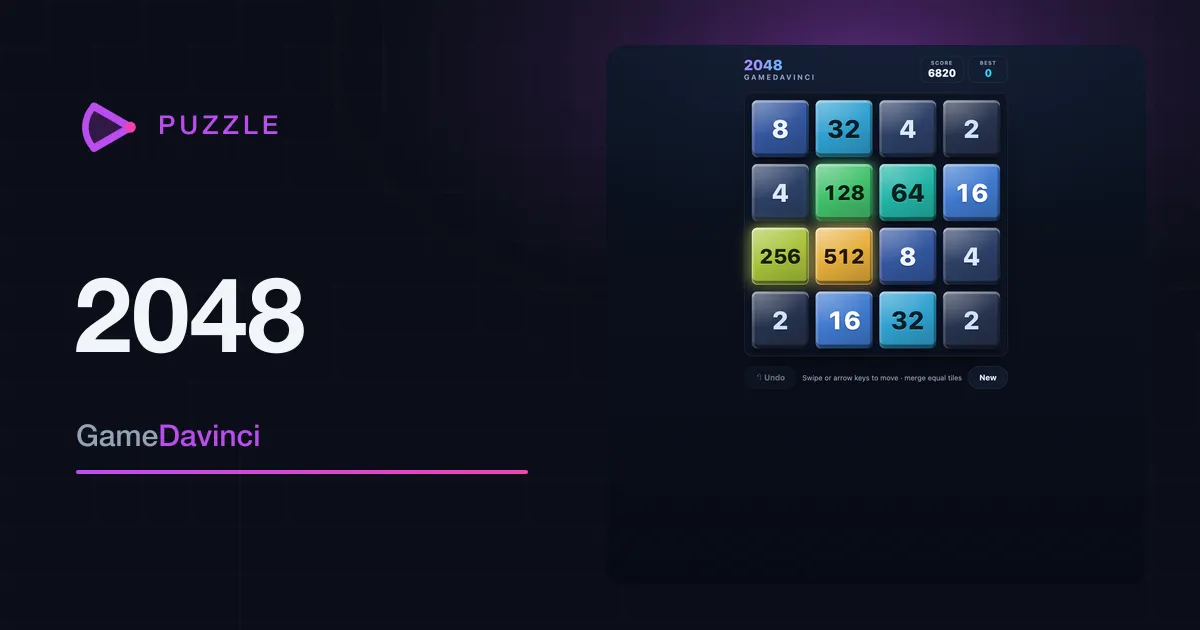 Featured
2048
Slide the numbered tiles, merge matching pairs, and chase the elusive 2048 tile — one more move never hurts.
Puzzle -

Gem Match
Swap two touching gems to line up three or more, then watch the chain reactions cascade for bigger scores.
Puzzle -
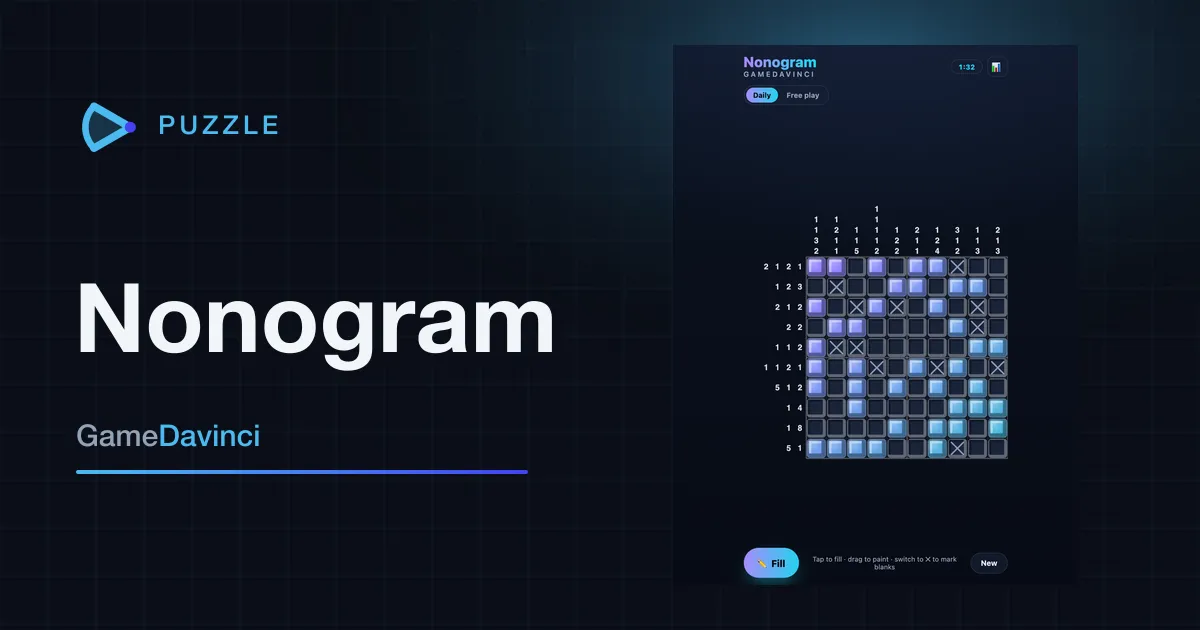 Featured
Nonogram
Use the number clues to figure out which squares to fill and reveal the hidden picture — one new puzzle daily.
Puzzle -
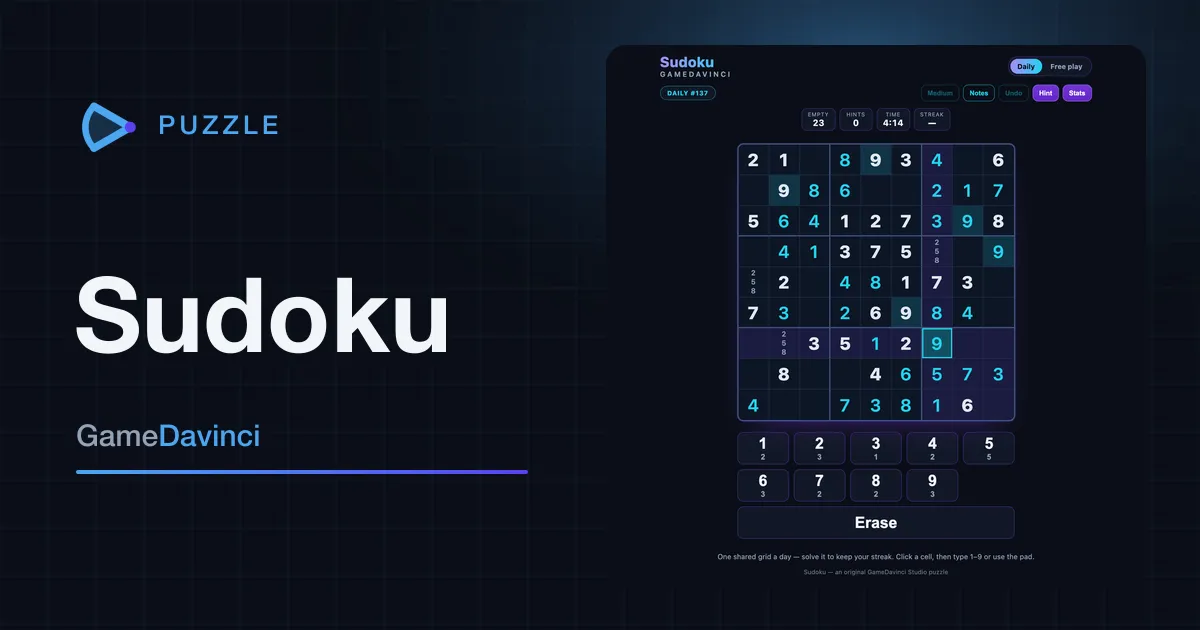
Sudoku
The classic number puzzle, now with a daily challenge — fill the grid so every row, column and box holds one to nine.
Puzzle