Daily Loop
Draw one closed loop along the grid lines so every numbered cell has exactly that many of its sides used. One answer, always reachable by logic.
Daily challenge
0 day streakDaily Loop serves one puzzle a day, generated from the calendar date — so the board you play is the same board every other player gets. Solve it before the day is out to extend your streak. Your stats stay in this browser; there is nothing to sign up for.
Next puzzle in . See all daily challenges →
About this game
Daily Loop is the puzzle usually called Slitherlink. You are given a grid of dots with numbers scattered among the cells, and you draw a single closed loop along the lines between those dots. The rule is simple to say: a cell showing 2 must end up with exactly two of its four sides on the loop, a 0 must have none, a 3 must have three. Cells with no number are unconstrained and you work them out from everything around them. The loop must be one continuous circuit — it cannot branch, it cannot cross itself, and it cannot come in two separate rings. That last condition is the one people trip over, because it is entirely possible to satisfy every single number on the board and still be wrong, having built two tidy loops instead of one. The pleasure of it is how the numbers talk to each other. A 0 tells you four lines are absent, which is often worth more than a 3 telling you three are present, and two 3s side by side force a line between them before you have drawn anything at all. Boards here are generated in the browser rather than shipped: a loop is grown at random, the numbers are read off it, and then clues are removed one at a time with the answer re-proved unique after every single removal. Anything whose removal would allow a second loop goes straight back. How far that removal is allowed to run is what sets the difficulty, because a board carved all the way to minimal almost always needs an assumption to finish, while a board left with more numbers on it can be reasoned out by counting alone. Every board is also checked to be reachable by a solver limited to human techniques before it is dealt, so the promise holds: no guessing, and no board where two answers remain at the end. Grids run six, seven and eight cells across. A hint reads the board as you have left it, points at the next line that is forced and explains why — and if you have drawn a line that is not part of the loop, it tells you that instead. A new board arrives every day, gentle at the start of the week and expert on Sunday, with a streak to keep, hint-free solves counted separately, and a link that deals a friend the exact board you just played.
Controls
Tap the line between two dots to draw it, tap again to cross it out as definitely empty, and once more to clear it. Dragging along a run of lines marks them all the same way.
Keyboard
- Z undoes the last line.
- H asks for a hint.
- R clears the board without changing the puzzle.
How to play
Draw one single closed loop along the grid lines, using the numbers to work out where it goes.
The rules
- A numbered cell must end up with exactly that many of its four sides drawn. A 0 has none, a 3 has three.
- Cells with no number can have any number of sides used — you work them out from their neighbours.
- The loop is one continuous circuit. It never branches, never crosses itself, and never comes in two separate rings.
On the board
- Crossing an edge out as definitely empty is not decoration — it is how you keep track, and most stalled boards are ones where nobody marked the empty edges.
- A number dims once it has all the sides it needs, and turns red if you have given it too many or shut it out of reaching its count.
- A dot with three lines running into it turns red immediately, because no loop can ever pass through it.
- Undo and reset are free, and a hint names the next forced line and the reason it is forced.
Details
- Category
- Puzzle
- Platform
- Web browser
- Rules
- Full rules
- Resets
- Daily at midnight
- Price
- Free
More games like this
 Featured
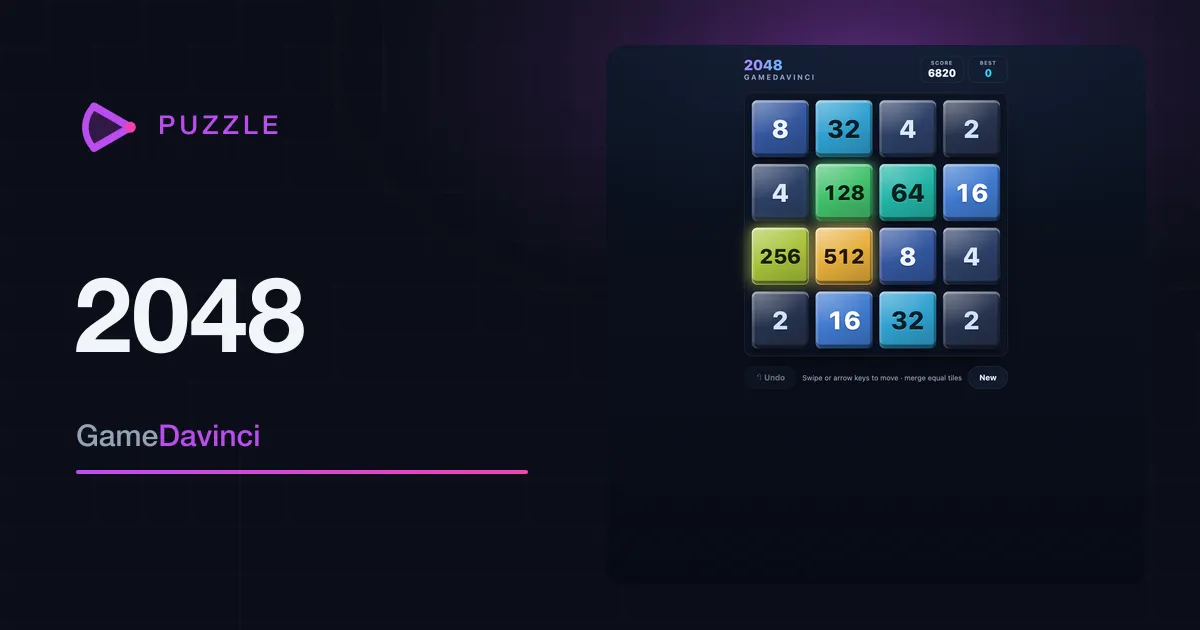
2048
Slide the numbered tiles, merge matching pairs, and chase the elusive 2048 tile — one more move never hurts.
Puzzle
Gem Match
Swap two touching gems to line up three or more, then watch the chain reactions cascade for bigger scores.
Puzzle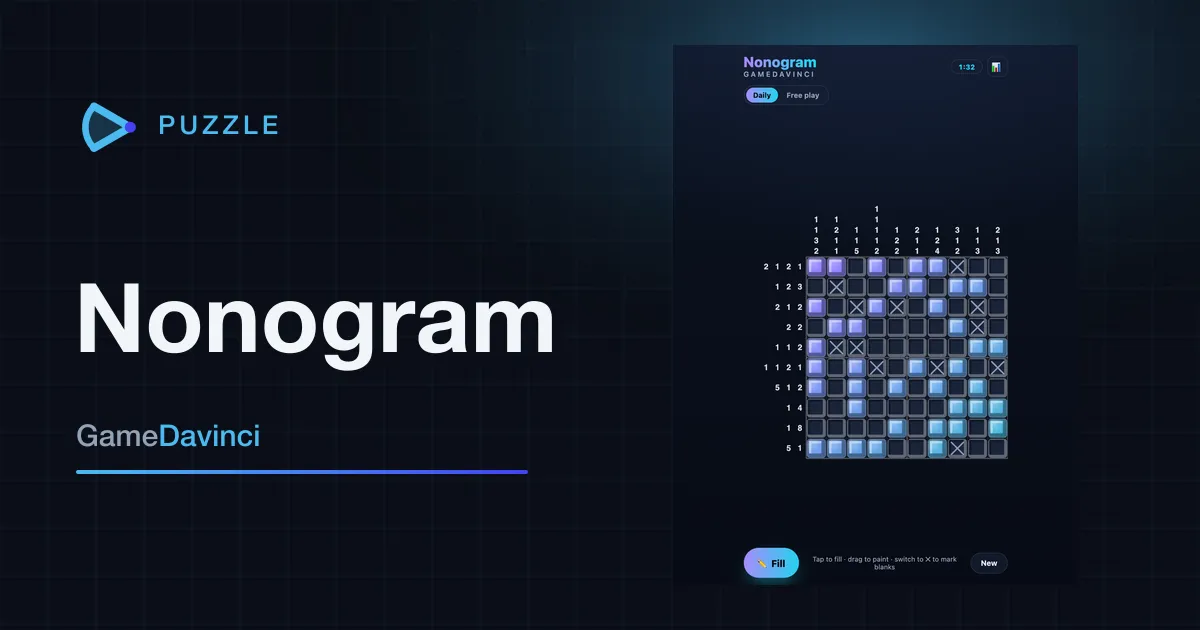 Featured
Nonogram
Use the number clues to figure out which squares to fill and reveal the hidden picture — one new puzzle daily.
Puzzle
Sudoku
The classic number puzzle, now with a daily challenge — fill the grid so every row, column and box holds one to nine.
Puzzle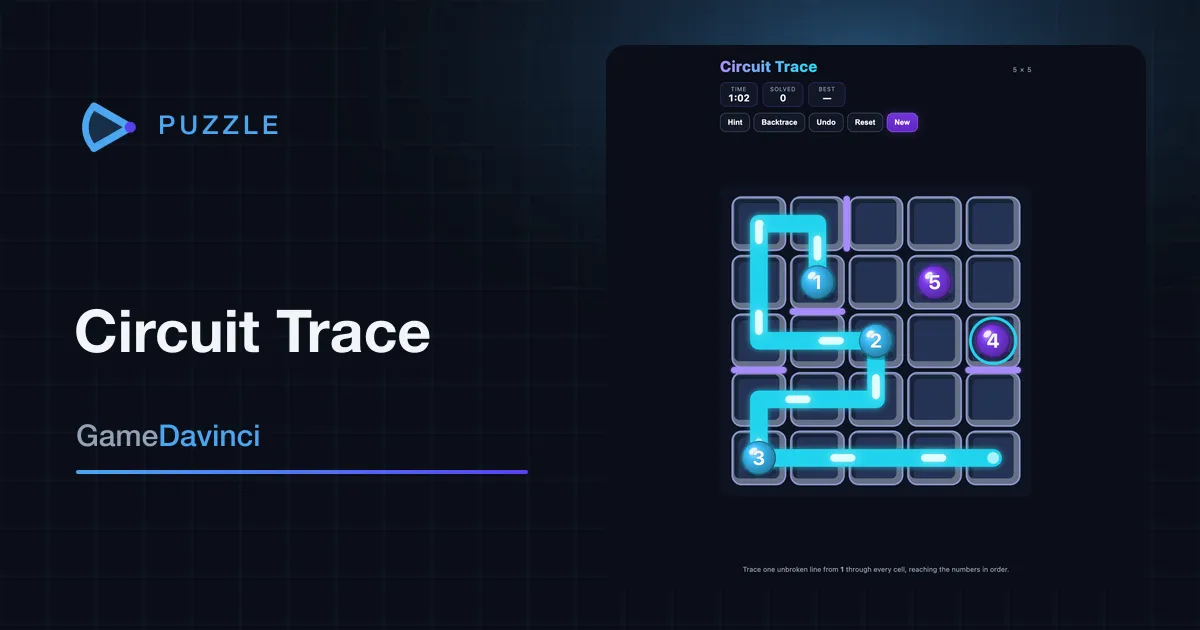 Featured
Circuit Trace
Draw one unbroken line that reaches every numbered node in order — and fills every last cell.
Puzzle
Jigsaw Puzzle
Drag the scattered pieces into place to rebuild the picture — pick 12, 35, or 70 pieces to match your mood.
Puzzle
Memory Match
Flip the neon cards, remember the pairs, and clear the board in as few moves as you can.
Puzzle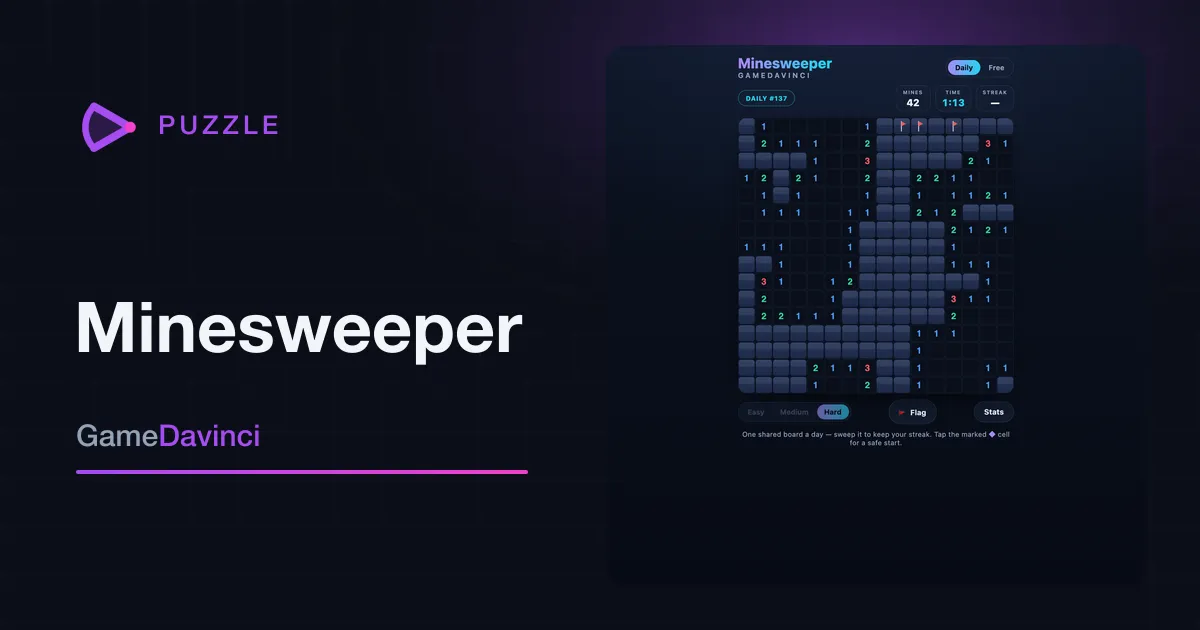
Minesweeper
The logic classic, now with a daily challenge — clear the grid without hitting a mine, guided only by the numbers.
Puzzle