How to play Number Rush
Sixty seconds of mental arithmetic. Everyone gets the same questions in the same order today, so the score actually means something.
Number Rush is a benchmark rather than a puzzle. There is nothing to work out and nothing to discover — the only question is how much arithmetic you can do in a minute, and the whole design exists to make that number mean something.
The round
Sixty seconds on the clock. A sum on screen, an answer box below it. Type digits and the moment what you have typed equals the answer, the next question appears.
That auto-advance is deliberate and it is what makes the format feel fast. Confirming every correct answer adds a keystroke to each one, and over forty questions that is a meaningful slice of the minute spent on admin rather than arithmetic. Enter still exists for anyone who prefers to commit — and unlike the auto-advance, Enter can be wrong.
A wrong answer costs two seconds and resets your streak. It does not end the run. A sprint that ends on the first slip stops being a measure of speed and becomes a measure of nerve, and it makes the score much noisier.
How the questions are built
The set ramps in four bands.
The first six questions are small addition and subtraction — two numbers under twenty — which exist to get your hands moving rather than to test you.
The next eight bring in the times tables and push the addition into the forties.
From there division appears. It is always built backwards from its own answer, so it always comes out whole; you will never be asked for a remainder or a fraction.
The last band is two-digit multiplication and three-figure addition and subtraction. Almost nobody reaches the end of it in a minute, which is the point — the set should not run out.
Every answer is a whole number and never negative. That is not a detail: it means the keypad needs no minus key and no decimal point, and there is never a moment of wondering what form the answer should take.
Why the ramp follows the question, not the clock
This is the design decision that matters most and it is invisible if it is done right.
If difficulty rose with the clock, then a fast player and a slow player would be answering different questions at the same moment — the fast one would be handed harder sums as a direct consequence of being good. A score would then be part speed and part handicap, and two scores could not honestly be compared.
Because the ramp is fixed to the question's position in the set, the twentieth question is the same for everybody. Reaching thirty means you did the first thirty questions of the set. Reaching twenty means you did the first twenty of the very same questions. The comparison is exact.
The daily set
One set a day, generated from the date, identical for everybody who plays it. This is the same reason a shared word puzzle spreads: a number is only worth sending if the person receiving it faced the same thing you did.
Your streak counts the days you have played, not the days you have won — there is no winning, only a score. Your best score is kept, and a run that has never happened shows as a dash rather than a zero, because zero is a score somebody could actually get.
Practice mode deals a fresh random set whenever you want one, and it does not touch your daily streak.
Sending a set
Alongside the score you can send the exact set you just played. The link deals the recipient your questions rather than a fresh set, so the challenge is a fair one and the reply is comparable to your own number.
Controls
Type the answer on the keypad or the number row. It moves on by itself the moment the number is right, so there is nothing to confirm.
Keyboard
- 0 to 9 type a digit.
- Backspace clears the last digit.
- Enter commits an answer deliberately, and counts as wrong if it is.
Strategy tips
- Use the keypad with your thumb on a phone and the number row with your whole hand on a keyboard — the keyboard is worth several answers a minute on its own.
- Do not confirm correct answers. The moment your typed number is right it advances by itself, so reaching for Enter after every sum is pure lost time.
- For two-digit addition, work left to right rather than right to left. 47 + 38 is 70 then 15, which is much easier to hold than carrying digits.
- Subtract by counting up. For 84 − 57, go from 57 to 60 and then to 84 — three and twenty-four, so twenty-seven.
- For multiplication by 9, multiply by 10 and take one lot away. The same trick works for 11, 19, 21 and any other number sitting next to a round one.
- Learn the doubles and the squares. Almost every awkward product is one step from a double or a square you already know.
- When you have no idea, skip the perfectionism and commit. Two seconds for a wrong answer is cheaper than ten seconds of staring, and the streak is worth less than the clock.
- Play the practice set for a few rounds before you spend your daily. The daily is once, and warm hands are worth five or six answers.
Now play Number Rush
Free, in your browser, with no download and no sign-up.
Play Number Rush →Number Rush is a puzzle game . See all puzzle games or browse the whole catalogue .
More rules and guides
-
 Featured
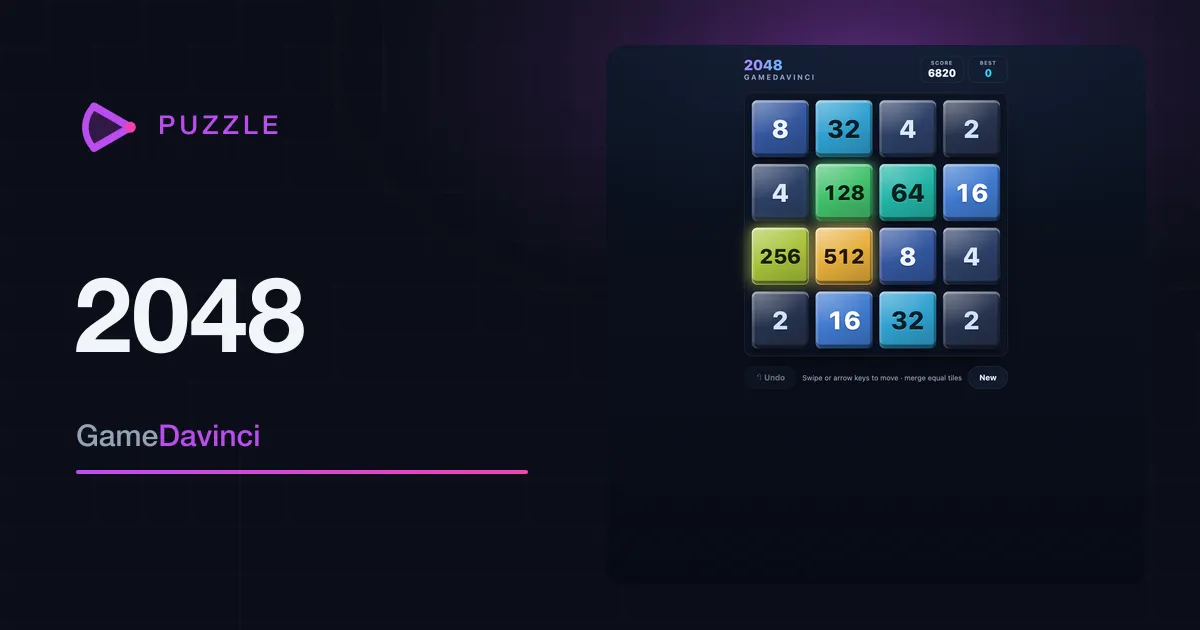
2048
Slide the numbered tiles, merge matching pairs, and chase the elusive 2048 tile — one more move never hurts.
Puzzle -

Gem Match
Swap two touching gems to line up three or more, then watch the chain reactions cascade for bigger scores.
Puzzle -
 Featured
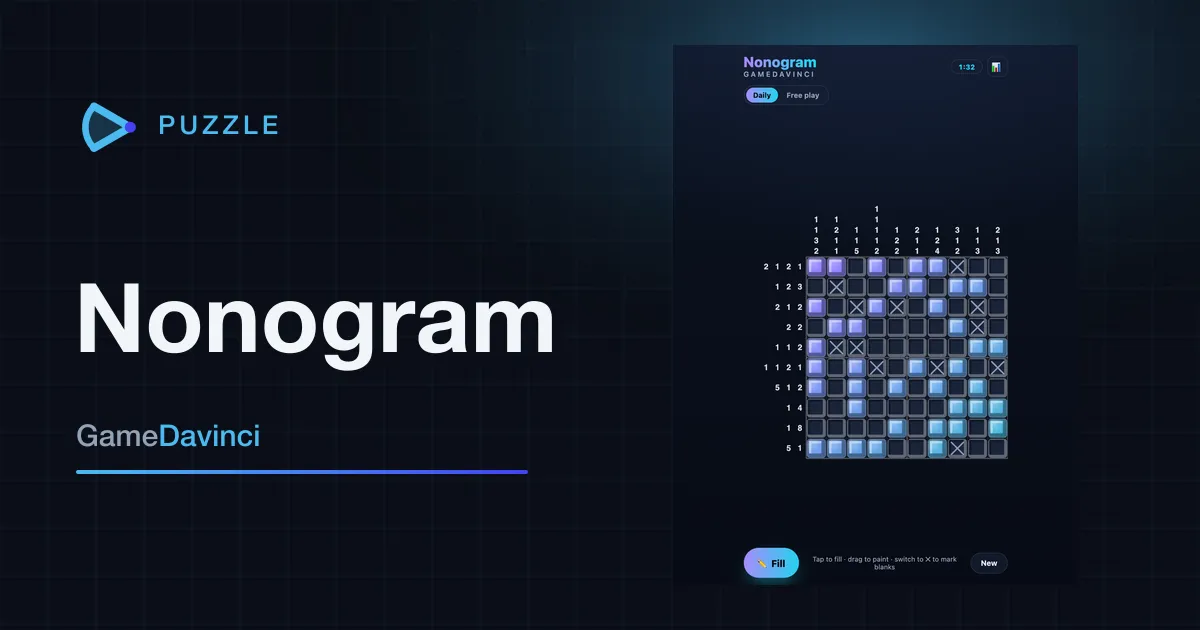
Nonogram
Use the number clues to figure out which squares to fill and reveal the hidden picture — one new puzzle daily.
Puzzle -
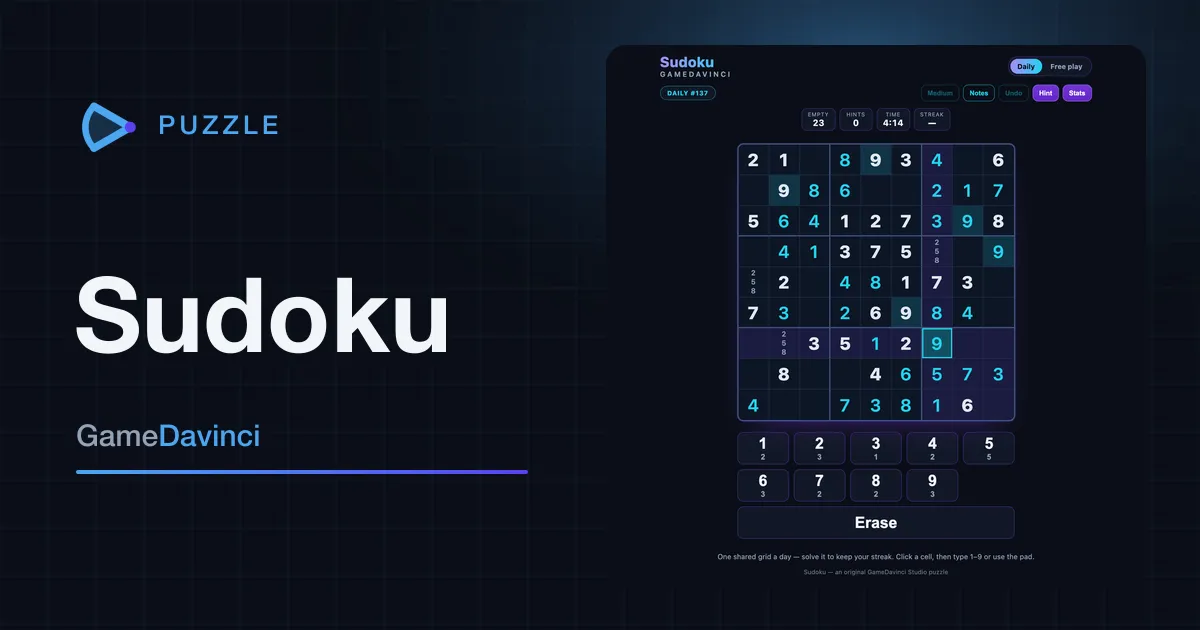
Sudoku
The classic number puzzle, now with a daily challenge — fill the grid so every row, column and box holds one to nine.
Puzzle